Blog by Modulus

READ OUR BLOG

Why You Shouldn’t Worry About Who Is In Charge

As an investor, you might be nervous or wondering how elections can affect your investments. After all, different political parties have different policies and agendas that could affect the economy, the business environment, and the stock market. However, history shows that the long term performance of the major stock market indices is largely independent of who is in power

The UK prime minister election and the FTSE 100

You must have been hiding behind a pretty big rock if you missed the UK election a few weeks ago. You might think that the outcome of the election would have a significant effect on the FTSE 100, the index of the 100 largest companies listed on the London Stock Exchange. Well, here’s how the FTSE 100 has done over the last 2 months which is the month before and about 3 weeks after the election…

FTSE 100 Performance from 1st June 2024 – 24th July 2024, one month before and almost one month after Prime Minister election

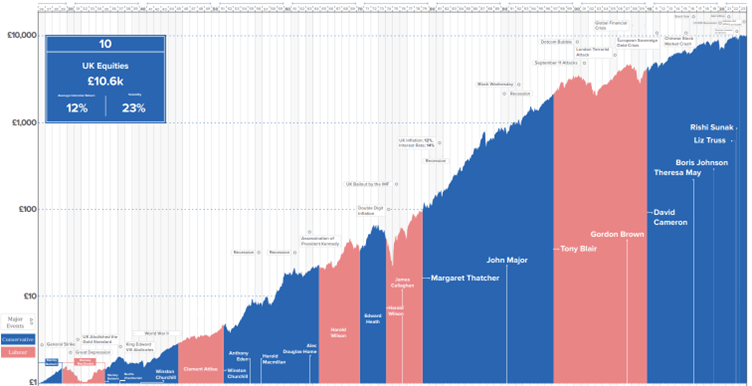
If we look even further back at the historical data reveals that the FTSE 100 has been largely indifferent to who is in charge of the UK government.

Massive thanks to Timeline for this chart

The US presidential election and the S&P 500

The other “big” election is the US presidential election – again, how could anyone have missed it? The US is the world’s largest economy and the home of many of the world’s largest and most influential companies.

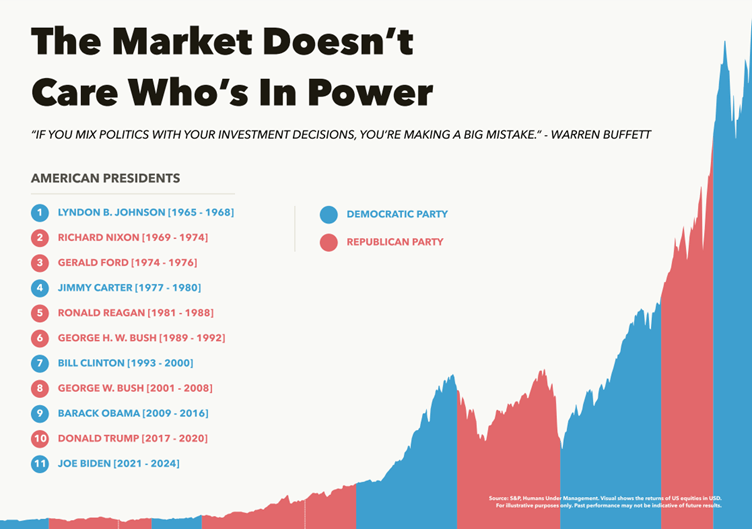
The US president has a lot of power and influence over the economic policies, the trade relations, and the geopolitical issues that affect the global markets. Therefore, you might think that the US presidential election will have a significant effect on the S&P 500, the index of the 500 largest companies listed on the US stock exchanges. However, again, the historical data shows that the S&P 500 has been largely indifferent to who is in charge of the White House.


Massive thanks to Humans Under Management for this chart

There will always be short term reactions (both good and bad) based on these events, and many others, but in the long run in all sorts itself out.

The bottom line

All elections are important events that can have a lot of implications for the society, the economy, and the world.

There are elections in 64 countries in 2024. We invest globally and so they may all have a short term impact, but eventually, we will all look back and they won’t look like much more than a little blip in time. So for you as a long term investor, they are not as important as they might seem at the time.

The historical evidence shows that the long term performance of the major stock market indices is largely independent of who is in charge of the country. Therefore, you should not let your political preferences or biases influence your investment decisions.

Sit back, enjoy the coverage of the politics if that’s your thing and don’t be worrying about the stuff you can’t control.


“Sure Insurance Companies Never Pay Out Anyway…..”

Quite often we hear from people that their friend’s sister’s brother’s best mate tried to claim on their life insurance or critical illness and it wouldn’t pay out, so what’s the point?

Here’s the summary from the Aviva 2023 claims report which shows that 50,631 individual claims were paid, totalling £1.18 billion.

Since 2019, they’ve paid out on 97.8% of their individual protection claims received.

All other providers release their stats too, and if we are ever discussing your protection needs, whichever insurance provider we choose, we will speak to you about their claims statistics.

So this just goes to show that the myth that they don’t pay out is exactly that – just a myth!

What Can You Protect?

The three most common insurances are

  1. Life Insurance – Pays out a lump sum if you die
  2. Critical Illness Insurance – Pays out a lump sum on diagnosis of a specified critical illness
  3. Income Protection – pays out a regular income if you are unable to do your job due to medical reasons.

We would normally be advocates of a mix of all three. Life Insurance and Critical Illness can often be combined into one policy if that’s what works best for you.

You will always hate seeing the monthly premiums going out of your bank account, unless of course you need to claim on it, and then you’ll probably think it’s the best money you ever spent!

But let’s not celebrate too much….

It’s important to remember that behind these stats are people and their families. That’s over 50,000 people and families effected last year by illness or death who happened to have an insurance policy with one company.

It’s not something we should ever forget, so while it may feel like insurance companies proudly boast their claims records, don’t forget what it actually means.

And that while we all say “But it won’t happen to me…” I bet you those 50,000 other people thought the same too.

Accept the responsibility that your family needs you, and take action.

What price do you put on peace of mind for you and your family?

If we can help, please do get in touch.

Helping Business Owners Plan Their Exit

We work with business owners and we often talk about how they plan to exit their business?

Many tell us their business is their pension, but they’ve no idea how it’s going to work financially?

You may also have to cope mentally with the loss of identity or purpose that comes with leaving your business.

One of the big planning areas is what are you going to do after your exit, and what that lifestyle looks like? Only then can we start planning for it.

This is a complex and emotional decision that requires careful planning and professional advice. As such, rather than simply writing pages and pages on it, I thought I would show you how we help you plan for it.


Your Options

You have several options, but each one of them can be complex. You will want advice from your team of professionals, including your Financial Planner, Accountant and Solicitor. Some business owners might even have business coaches/mentors to help. There are also specialist professionals who only look after business sales, such as those in Corporate Finance.

You will want to have a team of these people helping to guide you through the process

Option 1) Selling the business to a third party

A common way to exit your business is to sell it to a third party. It might be a competitor, a supplier, a customer or a private equity firm.

This can be an attractive option if you want to maximise the value of your business and get a lump sum payment to fund your lifestyle.

If you are considering selling your business, you need to plan ahead and prepare for it. You may need to improve your financial performance, streamline operations, document your processes and build a strong management team. In a nutshell, your business must be able to function without you.

It is unlikely that you will have  a clean break. You may be contracted to work for an initial hand over period for anything from 6 months to 5 years and have contractual competition restrictions.


Option 2) Selling the business internally (like an MBO)

Another option to exit your business is to sell it internally to your existing employees or managers (A Management Buyout aka MBO).

This can be a viable option if you have a loyal and capable team that can take over the business and continue its success. Some of the benefits of selling your business internally are:

  • Preserve the culture and values of your business and ensure a smooth transition.
  • Maintain a good relationship with your employees and managers
  • Avoid the hassle and uncertainty of finding a suitable external buyer and negotiating the terms of the sale.

However, selling your business internally also has some challenges, such as:

  • Accepting a lower price for your business than what you could get from an external buyer
  • You may have to provide some financing or guarantees to your employees or managers, which exposes you to some risk if they default on their payments.
  • Staying involved in the business for a longer period of time to provide support and guidance to your successors.

Therefore, if you are considering selling your business internally, you need to plan carefully and communicate clearly with your employees or managers.

Option 3) Passing the business on to family

A third option to exit your business is to pass it on to your children or other family members. Go and watch the TV series Succession for how not to do this.

However, passing your business on to your children also has some pitfalls, such as:

  • There may be family conflicts or disputes over the ownership and management of the business.
  • You may have to compromise your retirement income or lifestyle if you depend on the business for your financial security.

You need to assess the readiness and suitability of your children to take over the business, and prepare them for the challenges and responsibilities that come with it. Also, prepare yourself so you don’t find yourself saying “That’s not how I would have done it…”

Option 4) You simply shut the doors

Your business simply might not be sellable.

If you are the only worker and winner of new business, there’s not much to sell if you aren’t around to continue the work.

With this option, we need to make sure you can save enough during your working years to sustain you when you decide to hang up your boots.

How financial planning can help you decide on your business succession plan

As you can see, there is no one-size-fits-all solution when it comes to exiting your business and securing your personal and family’s financial future.

Each option has its pros and cons, and requires careful consideration and preparation. That’s why you need the help of professionals who can guide you through the process and help you make the best decision for you and your family.

If you are a small to medium sized business owner who wants to plan for your business succession and achieve your retirement goals, we can help you.

Get in touch to see if it’s time you started to plan your next steps.


“Here’s an £800 kettle. Would you buy it?”

Spoiler – lots of you have

Imagine you’re renovating your kitchen. You’re in the moment, dreaming of the island, the worktop surfaces, the marble backsplash or if you’re like me, the gadgets. Looking forward to the parties you’ll have with your friends. The afternoons and evenings sitting around with your family talking and laughing.

Now, you’re talking to people helping you design and plan it. Then, I come along and say, “Would you like an £800 kettle? Or this even fancier one which is £1,300?”

The answer to that question is of course, a resounding “No.”

And yet, many of you have them. Some of you have made me a coffee using them.

But just one brand which sells them, arguably the market leader, has made over £100million turnover in just the UK. They are present in 16 different countries so there is obviously worldwide appeal. *

What I’m talking about is, of course, the Boiling Water Tap, and the brand I’m talking about specifically, is Quooker.

Now the penny has dropped. All it does is it produces Boiling Water instantly. “The tap that does it all” But if you step back, it does exactly what a kettle does – it produces boiling water. The only difference is you didn’t need to wait 3 minutes for it.

In a simple nutshell, that’s Marketing. They’ve taken an imaginative slant on something relatively boring, captured your imagination and made the sale.

So how can we use this in our own personal financial lives?

Spending versus Lifestyle

In recent years, I’ve just been getting by rather than living in style. We started the business three years ago with no clients, so of course it was going to take time before I could take more than a basic income. But coupled with that is the fact I have three children in childcare. And for anyone who has been living under a rock, childcare is expensive!

By the time our mortgage and childcare bills are paid, we’re close to £3,500 of monthly outgoings (£4,000 on a 5 week month) with all your usual bills and life to add on top of that. I’m not complaining – we love our house and the fact we can both do our jobs too.

But something some of you will have heard me say is I want to put some “style” back into our “lifestyle.” (I wholeheartedly accept that this is an extremely cheesy phrase.)

We want to focus on enjoying our lives as a family. We’re thinking about what we want our life to look like. Dreaming of holidays or caravans or a meal out or a night away.

We work to live, we don’t live to work.

This is something which I spend at least some part of pretty much every meeting with clients and potential clients discussing. What do you want your lifestyle to look like? And I want to walk the walk as much as talk the talk.

Reframing the Conversation

While you probably started talking to myself or John in a bid to save tax, or to try to make your money work harder, or didn’t think your investments were doing anything or to start thinking about stopping work, hopefully you would agree the conversation hasn’t remained on this. It’s become what do you want to do both now and in the future?

And then we’ll figure out the best way to hopefully make it happen.

Now, if I had originally said to you, “here’s an expenditure questionnaire spreadsheet, please complete it for now and in retirement.” Would you complete it? Of course not.

If I asked you about your budget, do you have one? Do you look at it and stick to it? The answer is, Probably not.

But that’s exactly what we’re doing in financial planning. We’re trying to make the most of what you have both now and in your future. And together we regularly review where you’ve come from and plan for your future.

If you’re saving for your future, you aren’t doing it at the expense of doing something you really want to do now.

You’re being intentional about saving now to give you more opportunities in the future. You’re developing good habits. But you’re still enjoying the holidays, the experiences and the gadgets which make life fulfilling now. You might drive the nice car, have the nice house and the fancy clothes, but that isn’t all you have.

The Value is in the Planning, not the Plan

The value of working with us should be both in getting you to do something (ie. Save and invest) but also that you have the trust and confidence that what you are doing maximises your life. You can enjoy what you have now knowing that you’ll be able to enjoy your future too.

It’s like with overpaying a mortgage. Would you rather overpay your mortgage now to get it paid off, or would you rather simply know that you have the money that you could pay it off if you needed to?

Or saving into a pension. I’m 33 (for another couple of months anyway) retirement is still a long way away. Piling money into a pension for 20+ years’ time still doesn’t exactly fill me with excitement. But if it’s reframed as “this small action today and each month from now is going to grow into something much bigger, which gives me options to stop working on my own terms and live the life I want in 20+ years. Oh, it will save me some tax now too” – now I’m listening.

On face value, nobody wants an £800 Kettle. But they want the benefit that the instant hot water gives them in time saved, hassle removed and more options to fill it!

And that’s exactly what financial planning should do for you too.


Get in touch with us if you want to start your planning now.


*https://www.kandbnews.co.uk/news/quooker-uk-outlines-2023-plans/

Another Budget with not much to shout about…

We haven’t rushed out this blog to start shouting from the streets about the changes, because frankly, I’m struggling to get excited about any of it. I personally would have liked to see an end to frozen tax brackets, or even a suggestion that something might increase soon. With the freezes, we all pay more tax (assuming pay increases) and so, I was torn in even writing anything here. 

But here’s some of the more relevant announcements. 

National Insurance Rates Cut Again 

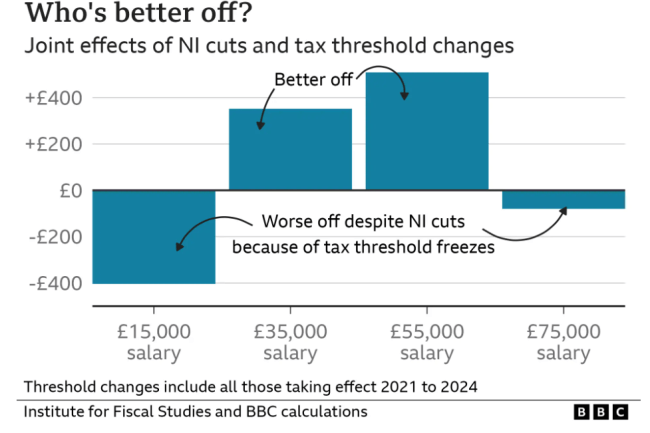
The National Insurance rate will be reduced by 2p for employees and self-employed individuals, potentially saving the average worker around £450 per year. However, if you are on a low salary or a salary over £60k, according to the BBC, you are worse off due to the tax thresholds being frozen/reduced since 2021.  

I find it hard to get excited about this, but every little helps I guess. 


The British ISA 

A brand spanking new, British ISA (another acronym coming in – BISA), with an additional allowance of £5,000 will supposedly be introduced, and it can only be invested in UK companies. Who says the Government can’t force us into potentially negative outcomes?   

If you invest your entire £5k new allowance, to maintain a global asset allocation in your ISA, you would need a further £137k in your ISA in a global portfolio (excluding UK) just to maintain global diversification. This is because the UK makes up just 3.5% of World Equity Markets.  

And that’s only for one year, just wait until you top it up for your second year’s contributions. 

Good old Sunak and Hunt are doing everything to undo our work of not having a UK home bias.  

In reality though, will this new BISA even happen? Who knows. Look at the uptake of the Lifetime ISA – there are still very few providers who support it.  

But it does mean for anyone with a Lifetime ISA, they would be able to invest up to £26,000 per annum tax free. (£5k in a British ISA, £16k in a Stocks & Shares ISA, £4k into your Lifetime ISA and also add on the £1,000 Government Bonus) 

Add to the fact the number of people who actually use their full ISA allowance as it is, and I’m not sure how much impact this will really have.  


Good News for Child Benefits  

This is probably the only thing that piqued my interest. Child benefit will now be paid in full to households where the highest earner earns up to £60,000 instead of £50,000, with partial benefits available for households where the highest earner earns up to £80,000.  

The taper will now be at 0.5% for every £100 earned over £60,000. For example, if you earn £65k, you would be entitled to 75% of full child benefit.   

There will also be a review and, hopefully, future change to consider household income rather than the highest earner. I would also imagine the household income threshold will be greater. I would hope this would be increased to something more like the “tax free childcare help” threshold of £100k, but don’t get me started on that misnomer.  

This will be great for higher earning single parents, or those couples where one might work part time, or not at all to look after children. 


No Change to Alcohol Duty 

Quick, grab yourself a cold drink. The freeze on all alcohol duty will continue until August 1st 2025. 


Bad news for Smokers 

The duty rate on tobacco products is set to rise by 2% above the Retail Price Index (RPI) inflation, with hand-rolling tobacco facing a steeper increase of 12% above RPI.  

Chancellor Jeremy Hunt announced a new tax on vapes to discourage smoking alternatives, making them unaffordable for children. This levy will be implemented from October 2026 and will apply to the liquid in vapes, with higher taxes for products containing more nicotine.  


Non Dom Tax Rules 

New rules for non-domiciled individuals (non-doms) will be introduced from April 2025. The proposal will mean if you have lived in the UK for 3 years or more, you will begin to pay UK tax on non-UK income and gains.  


Pensions  

Thankfully pensions were left alone. However, there is a review into potential changes where employees may have the power to choose where their contributions go. This would remove the possibility of losing track of small pots and apparently “it has the potential to unlock additional retirement income for savers.”  

The Government are doing this to see if an approach (like the one in Australia) is possible, where one pension which follows you, and any employer you have pays into it. At present, this is only a review and consultation, and is a long way from fruition. 


So that’s basically it. Again, I don’t think there’s anything there to be getting particularly excited about, but feel free to call me a cynic.  


UK recession - the end of the world?

Recession – the end is near?

Headline news – the UK is in a recession!

What does this really mean though? Well basically it means that the economy has been shrinking for two quarters in a row.  Now if you listen to or read the blurb from some media outlets, you could be forgiven for thinking we are approaching the end of days or something. We aren’t.


What Does Recession Actually Mean?

The UK entering a recession can affect people’s money in different ways, depending on their situation. Here are a couple of simple ways to try and explain what is going on.


  • Try to imagine the economy as being a huge cake that can get bigger and smaller. If the cake grows, everyone gets a bigger slice. When the cake shrinks, everyone gets a smaller slice. A recession means the cake has shrunk for two consecutive quarters, or six months.


  • Think of your money as water in a bucket with a hole, which is your spending (where have we heard this before). When the economy is going well, you can probably fill your bucket with a bit more water. If there is a bit of a drought e.g. the economy is not going quite as well, then you might have to use some more of the water in your bucket. A recession might mean you might have to use more water than usual from your bucket (or fill it up some other way).


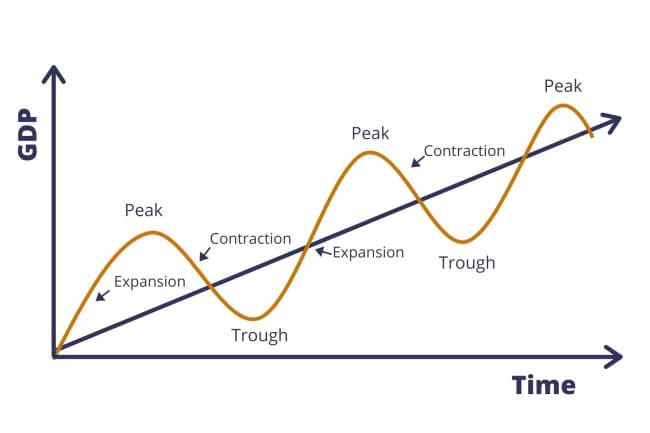
The good news is that recessions don’t last forever.  A recession is a natural part of the economic cycle. Que a quick overview of the economic cycle.


Economic Cycles

When the economy grows, people generally have more money to spend and invest – this is called an expansion. This invariably hits a natural peak (as nothing can rise forever) and the expansion ends. The economy will then shrink and contract, and people generally have less money to spend and invest – this is called a contraction or a recession.  The contraction ends when the economy reaches a natural trough, which is its lowest level and then the recovery starts. And so, the process starts again with growth and so forth.  This is the cycle that economies work on. Nothing can go on forever – either up or down.

Please note that this is only a brief bit of information about what a recession actually is.  It isn’t for me to go into great detail about the causes of recession or the ways governments can try to mitigate their impact in the long term (way above my paygrade).  I also understand that recessions can have devastating impacts for many people in terms of their livelihoods and family circumstances.


How Does A Recession Impact My Investments?

The thing to remember is that recession isn’t here for the long term, unlike investments.  If the markets are spooked by the news of a recession, then the big thing is to not panic.   Would you sell your house because someone has said that it is worth slightly less this week than it was last week? If the answer is no then why would you consider selling your investments when the market is in a temporary decline.


“In the short run, the market is a voting machine but in the long run, it is a weighing machine” – Benjamin Graham (the famous investor who was a mentor to Warren Buffet)


What we need to remember is that in the short term the markets can be affected by people being people. This can mean people act irrationally out of fear, the unknown and by listening to all the doom and gloom merchants in the media (this helps drive volatility – the way the stock market moves up and down).  In the long term though markets are like a weighing machine which measure the value and output of the great companies of the world (think long term – Apple and Microsoft weren’t always the biggest companies in the world).


If news of this latest recession does lead to a temporary decline in the markets, then try to think of this as an opportunity.  It is potentially a chance to buy more shares / units in the great companies of the world at a lower price (a short-term sale if you will).  A well-diversified portfolio, with holdings across different asset classes, sectors and regions all help to reduce risk in the long term.  For the portfolios we advise on, UK stocks make up a very small part of the portfolio (as evidence shows that the UK is only a small part of the global stock market – but we will come back to that another time!).


Always remember that investing is a long-term game, and that markets will tend to recover over time.


Note – I deserve a medal for not making the obvious bucket and well pun!


Please note that this blog is for information purposes only. Past performance is not a guarantee of future returns.  Investments can go down as well as up, and you may not get back the full amount you invest. Please seek professional advice before making any investment decisions.

*Image sourced from – https://secrethomes.ca/understanding-economic-cycles-part-i/

Chasing Cars!

Have you ever been stuck in traffic on a motorway? I can’t imagine that many of us living in Northern Ireland haven’t been stuck in traffic on the way to Belfast for what seems like an eternity!


You can be sitting there and slowly moving on, when suddenly you see a gap in the next lane that looks like it could save you a few precious seconds. You quickly change lanes, hoping to get ahead of the pack. And as soon as you switch you see that the lane you just left begins to move faster than the one you’ve just switched to. You feel a pang of regret and frustration. You wonder if you made a mistake. You look for another opportunity to switch back, or maybe to a different lane altogether.


Does this sound familiar? Well, if you’re an investor, you might have experienced something similar with your portfolio. You could have heard of a hot fund that just had a stellar year.  You make the switch, you pay the new fee and you’re on the bandwagon. You’re optimistic and know that you’re going to ride the wave of success. But then, what happens? The fund / investment you just sold starts performing better than the one you bought. You feel a pang of regret and frustration. You wonder if you made a mistake. You look for another opportunity to switch back, or maybe to a different one altogether.


So the question has to be – why do we put ourselves through this? Well in short it is because we are human, and it is embedded into our behaviour.  There are however more scientific explanations, psychological factors, that influence our decision making, such as:


– Recency bias: We tend to give more weight to recent events and trends than to historical ones. We think that what’s happening now will continue to happen in the future, even if it’s not supported by evidence or logic.  Think of how the news and media influences this every day.  You will often hear about “Billions wiped off the stock market” but you never see the headline “Billions added on the stock market”.  Bad news sells.


– Fear of missing out (FOMO): We don’t want to be left behind by others who seem to be doing better than us.  Joe down the pub told you he is invested in the latest fad and says you should be as well. We feel pressured to join the crowd and follow the herd, even if it means going against our own judgment or strategy.  Just like seeing that car in the next lane pull away, some people can’t bear to miss out on those perceived valuable seconds and may make a rash switch to avoid this.


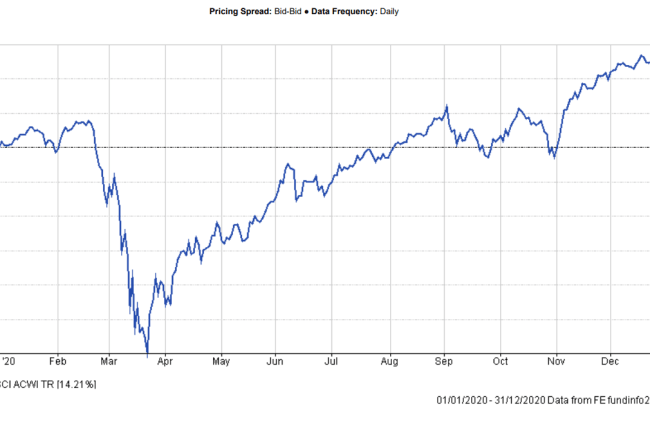
– Overconfidence: Quite often we think we know more than we do. We underestimate the risks and uncertainties involved. For instance, we may think that we can anticipate the traffic flow and switch lanes at the right moment, or that we can react faster and safer than others. Similarly with investing, we may think that we can time the market and buy low and sell high, even though it’s been proved that is impossible to do so consistently.  Can you remember what happened after the first Covid lockdown was announced?  Markets went into meltdown. Advice was being doled out by Joe (down the pub before it closed) and even some advisers to cash out now. Many moved their invested money into cash. And what happened – the markets went off on a tear.  Global markets, despite an almost 30% drop recovered to finish up over 14% for the year.  If someone cashed out at a loss and then bought back in when markets “were good again”, then they essentially sold cheap and bought expensive (a real way to destroy wealth quickly!).

Data shows the MSCI ACWI Index for the 2020 Calendar year. Taken from FE Fund Info.


– Loss aversion: We hate losing more than we love winning. We hold on to losing investments for too long, hoping they will recover, and we sell winning investments too soon, fearing they will drop. Loss aversion is the tendency to prefer avoiding losses over acquiring gains.   It means that we feel more pain from losing something than pleasure from gaining something of equal value. For example, losing £100 feels worse than gaining £100.  It is like when you are in your car and you start falling behind the cars in the other lane. You don’t feel like you are moving forward when you know that you are. It seems like the other lane is going faster than you and you are missing out.


These are just some of the cognitive biases that can affect our decision making and lead us to making some poor choices – both in investing and driving.  They can make us act like impatient drivers who stress, chase cars and switch lanes every few seconds, increasing traffic congestion and possibly causing accidents.  It is the same for investing – where we could end up stressing, switching investments too often, chasing performance and paying unnecessary fees (and possibly taxes).


The result is likely to be the same, a bad driving / investment experience over the course of the journey.


They key is patience, both on the road and when investing.  Sit back and remain calm and rational.  At times this can be easier said than done so here are some tips to help:


– Plan your journey in plenty of time and leave early!
You might not know exactly where you want to go to, but you will have a good idea of the general direction.  The earlier you start the journey then the less stress there will be when you are in traffic (or something happens). You need to know why you are investing (or driving), and what you want to achieve. Stick to your plan unless there is a significant change in circumstances (like a major life event or road closure).  Your journey can change a lot over a long distance, so it is important to check the map and maybe alter the route every so often.  Use your financial planner / a good Sat Nav system!


– Diversify
Don’t put all your eggs in one basket or all your wheels in one lane. Spread your investments across different asset classes and sectors.  Just like driving, sometimes it might be useful to use different routes or modes of transportation (you can’t drive all the way to Spain unless you’ve invested some type of submarine car). Diversifying means you can reduce your exposure to specific risks and benefit from different opportunities (tax planning, time saving etc).


– Ignore the noise
Don’t let the car beside you who is blaring their horn influence your journey.  Likewise, don’t let the media, short term market fluctuations or other people influence your decisions (Joe down the pub is the worst for this). Others are often driven by emotions, opinions, or agendas that may not align with yours. Focus on your journey, your plan and trust it.


– Be disciplined and patient
Don’t let emotions get the better of you. Don’t chase perceived short-term gains. Don’t react to every market movement or traffic jam. Focus on the long-term outcomes and the big picture.  Saving a few seconds on a 12-hour journey is hardly worth paying additional costs and possibly causing some long-term damage by taking unnecessary risks!


So next time you’re tempted to change lanes or investments, ask yourself: Is this really worth it? Am I making a rational decision based on my plan and goals? Or am I just following my emotions and impulses? If you’re not sure, maybe it’s better to stay where you are and enjoy the ride. You might find that you’ll reach your destination faster and happier than those who keep switching and stressing.


Eventually you’ll become the person who sits back (in your own lane) and marvels at those who believe they can outsmart traffic.  You’ll be the person who can relax and watch, as others start cutting up traffic and wasting fuel whilst getting increasingly stressed.


Please note that this blog is for information purposes only. Past performance is not a guarantee of future returns.  Investments can go down as well as up, and you may not get back the full amount you invest. Please seek professional advice before making any investment decisions.

Deck the Halls with some Tax Savings!

Ho Ho Ho, Modu-Claus here (get it!) with some tips for business owners to save tax this festive season!


  1. Decorating the Office!


If you’re going to decorate your workplace this festive season, then you’re probably a bit late! Seriously, who are you – The Grinch?! Remember though that you can claim the cost of purchasing the decorations as a business expense (and if you paid someone to do it professionally then you can claim for this as well).  Remember – this has to be for the workplace, you can’t go getting an inflatable Santa for your house!

  1. The Company Christmas party!

If you’re planning to throw a Christmas party for your employees, you can claim the cost of this as a business expense.  For this to qualify then it should be an annual event and you can spend up to £150 per person.


  1. Christmas gifts

You can claim the cost of Christmas gifts to employees as a business expense. Certain criteria needs to be met for employee gifts to qualify though


  • Gifts must not be worth more than £50 per employee
  • The gift cannot be cash or cash vouchers
  • The benefit can’t be related to employee performance (this is so it can’t be used as a replacement for normal pay to avoid paying tax & NICs)


If you provide a non-cash gift to an employee (that meets the above criteria), then it is considered a ‘trivial benefit’. This means that it isn’t a benefit in kind for the employee, so they don’t pay Income Tax or National Insurance. They also don’t need to let HMRC know about it. However, if the gift costs more than £50, it will be taxable as a benefit in kind. Things like a Supermarket voucher, Online Retailer or AllForOne voucher work well here.


  1. Pension contributions:

This old chestnut is the grandfather of tax planning for businesses! If you’re planning to pay staff a bonus (& not just a gift as above) then paying it into their pension can give them more bang for their buck!  Employees don’t have to pay National Insurance or Income Tax on the pension contribution into their pension.    The cost of pension contributions for employees can be claimed as a business expense.  This is the same for business owners who work in their business, if it is a limited company. If the business is a sole trader or partnership, then tax relief for pension contributions for the owner will be claimed via self-assessment.


As always the contributions must be made to a registered pension scheme, and the total amount of contributions you can claim as a business expense is limited to the annual pension allowance.  For more pension tips for business owners then please see our Corporation Tax Increases Blog.


Hopefully these tips will help you plan for a very Merry Christmas by taking advantage of some tax savings!


The Cost of Market Timing: Why You Should Avoid It

Trying to time the stock market can lead to missed opportunities

Market timing is an investment strategy that aims to buy and sell investments to maximise returns. However, it is not always a wise investment choice.

The main problem with market timing is that it is extremely difficult to execute consistently. To successfully time the market, you have to be right twice.

  1. You need to choose the best time to sell, and
  2. You have to identify the optimal time to re-enter the market.

The issue is that an error in timing entry and exit points can be very costly for investors. This is because the best market days often occur during the most challenging downturns, and missing even a single day can have dramatic consequences for long-term capital value.

A Recent Study – the facts

Numerous studies have demonstrated that time in the market beats timing the market.

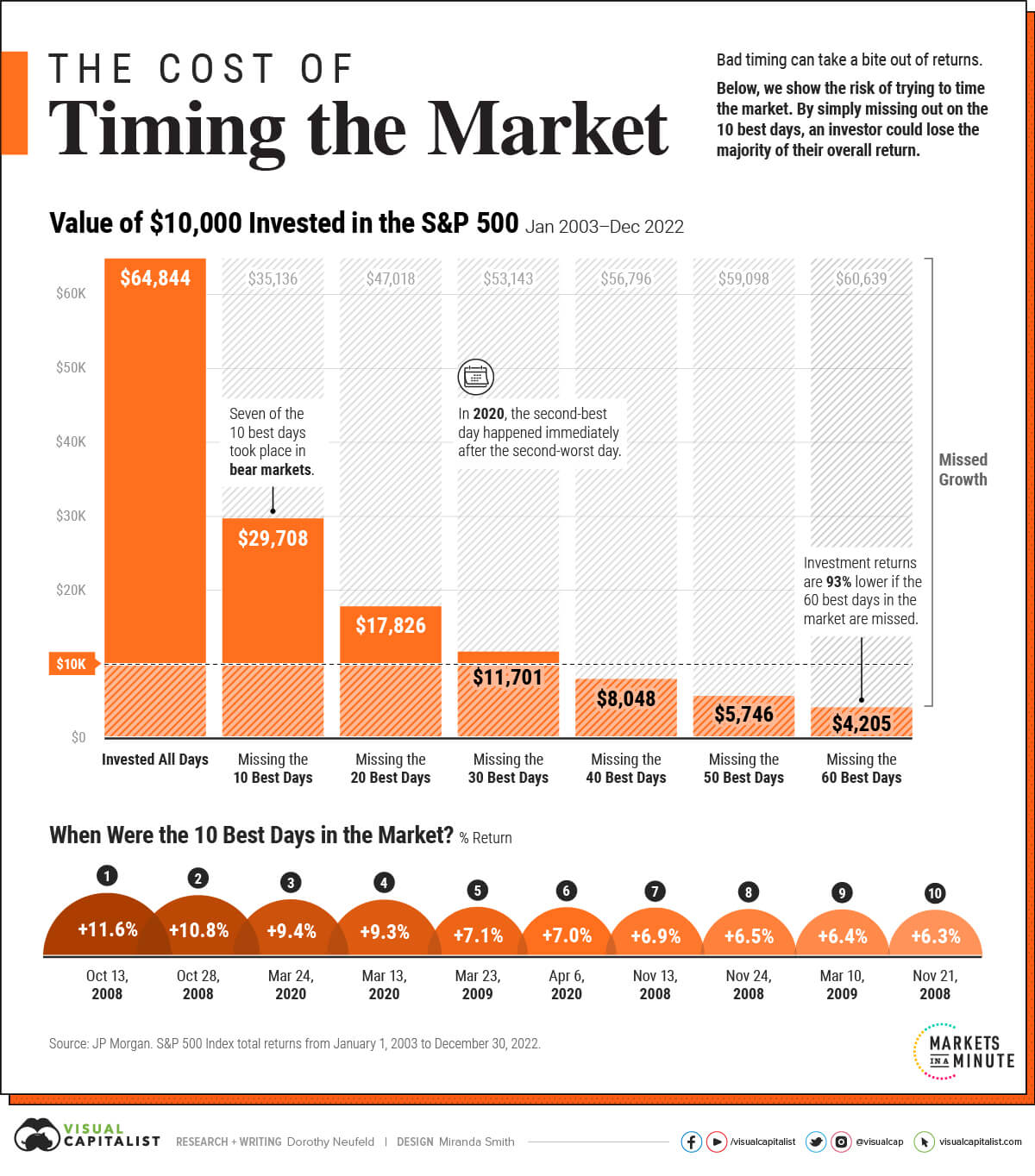
Last year, as illustrated by Visual Capitalist, a JP Morgan study concluded that even missing just a handful of the best market days can significantly reduce an investor’s average returns over time. The chart shows the 10-year performance of the S&P 500 stock index as of December 30, 2022.

As you can see, $10,000 invested in the S&P on 1st January 2003 for ten years, returned $64,844 in 30th December 2022. Safe to say, that’s quite attractive.

But what would happen if you missed the 10 best days within those 10 years? The return dropped to $29,708. That’s quite a difference for missing just 10 days in over 10 years.

Look when the best 10 days happened. During 2008-09 (The Recession) and March 2020, immediately after the first Covid lockdown market collapse. During both of these time periods, you could have been forgiven for panicking when you saw your investment values. But if you held on, you were definitely rewarded.

And what if you missed the best 30 market days in 10 years? Your return would decline to just $11,701. This would mean sacrificing almost all of the return on your $10,000 over 10 years. This is the risk of market timing.

Another issue with this is that it drives up costs. Every time you deal in the stock market, there is a transaction charge.

So What Can We Do About it?

When we’re talking to clients, particularly business owners paying into their pension, we generally prefer they make a monthly contribution with a view to a larger one off contribution towards the end of their business year. This helps with two things.

Firstly, Cashflow. How often do we say we’re going to do a big contribution to get to the end of the year and there’s not much cash left in the bank?

But secondly, it largely reduces the effects of market timing because you have been contributing monthly. This is called Pound Cost Averaging (or Dollar Cost Averaging if you follow American articles).

Therefore, we encourage our clients to avoid market timing and instead adopt a buy-and-hold strategy.

Buy and hold is known as a passive investment strategy in which an investor buys investments and holds them for a long period regardless of fluctuations in the market. An investor who uses a buy-and-hold strategy actively selects investments but has no concern for short-term price movements and technical indicators. Many legendary investors such as Warren Buffett and Jack Bogle praise the buy-and-hold approach as ideal for individuals seeking healthy long-term returns.

If you have any questions or would like to learn more about our investment strategies, please do not hesitate to contact us.


*Investments can go down as well as up, and you may not get back the full amount you invest.

**Past performance is not a guide to future returns

Risk and Reward: Embracing The Key To Long Term Investment Success

 “Please don’t check your investments every day”

This is something we tell every client when they first sign up. And it’s something worth repeating.

We know just saying this won’t change your behaviours. But hear us out.

Your investments will change every day. No question about that. And it can scare the life out of you if it seems to go down “too often” or by “too much.” At the same time, you might want to celebrate and retire tomorrow if you’ve had a few weeks of positives and only going up.

This is the disadvantage of online access and up to the minute information. By the way, our platforms only update once a day, so there’s no point logging in more than once a day

The house you own, your car, the prized painting on the wall would likely change in price if you valued it every day too. It’s simple supply vs demand economics. But we don’t value them every day. And so, they all seem less volatile, and therefore feel less risky.

Investment Risk vs Investment Volatility

What is at play here is Investment Volatility vs Investment Risk. They are linked, but they are different.

If you are investing your money for the long term, you need to understand these two important concepts: risk and volatility.

Risk is the possibility that you will lose some or all of your money.

Volatility is the amount of fluctuation of the value of your investments over time. In simple terms “How far up or down they go.”

Both risk and volatility can affect your returns, but they are not the same thing.

So what does that mean?

Risk is related to the quality of your investments. For example, if you invest in a small start-up company that goes bankrupt, you will lose your money. That is a high-risk investment. On the other hand, if you invest in a bank account which guarantees an interest rate, with the FSCS guarantee that you will get your initial sum (up to £85k) back, that is a low-risk investment.

Overall Risk can be reduced by diversifying your portfolio, which means spreading your money across different types of investments, sectors and countries. The old saying of “Don’t put all your eggs in one basket.”

Volatility, on the other hand, is related to how much your investments move up and down in price. For example, if you invest in the stock market, you will see the value of your portfolio go up and down every day, depending on the supply and demand of the shares. That is a high-volatility investment. If you purchase bonds (or fixed interest), where a government or company agrees to pay you a rate of return, and then return your initial investment at the end of the term, this should be a lower volatility investment.

This is normally the case, except for extreme time periods like September 2022. Interest Rates rapidly increased which, in turn, decreased the value of the agreed fixed interest rate.

Think of volatility like the comparison between a roller coaster and a gentle train ride.

Volatility can be reduced by investing for the long term, which means holding on to your investments and ignoring the short-term fluctuations.

The Key to Long Term Success

Why is it important to know the difference between risk and volatility? Because it can help you make better decisions and avoid emotional reactions.

The biggest long term risk to you is inflation. By flocking to cash bank accounts, you can lock in short term decent returns relative to what cash paid 2 years ago. However, cash won’t beat inflation in the long term. (Or at least it shouldn’t because it is used as a measure of control over inflation).

Locking in 5% today could turn out to be a savvy move in 12 months’ time. But if markets rebound and do a double-digit return, you could feel very silly. Nobody knows what will happen or when.

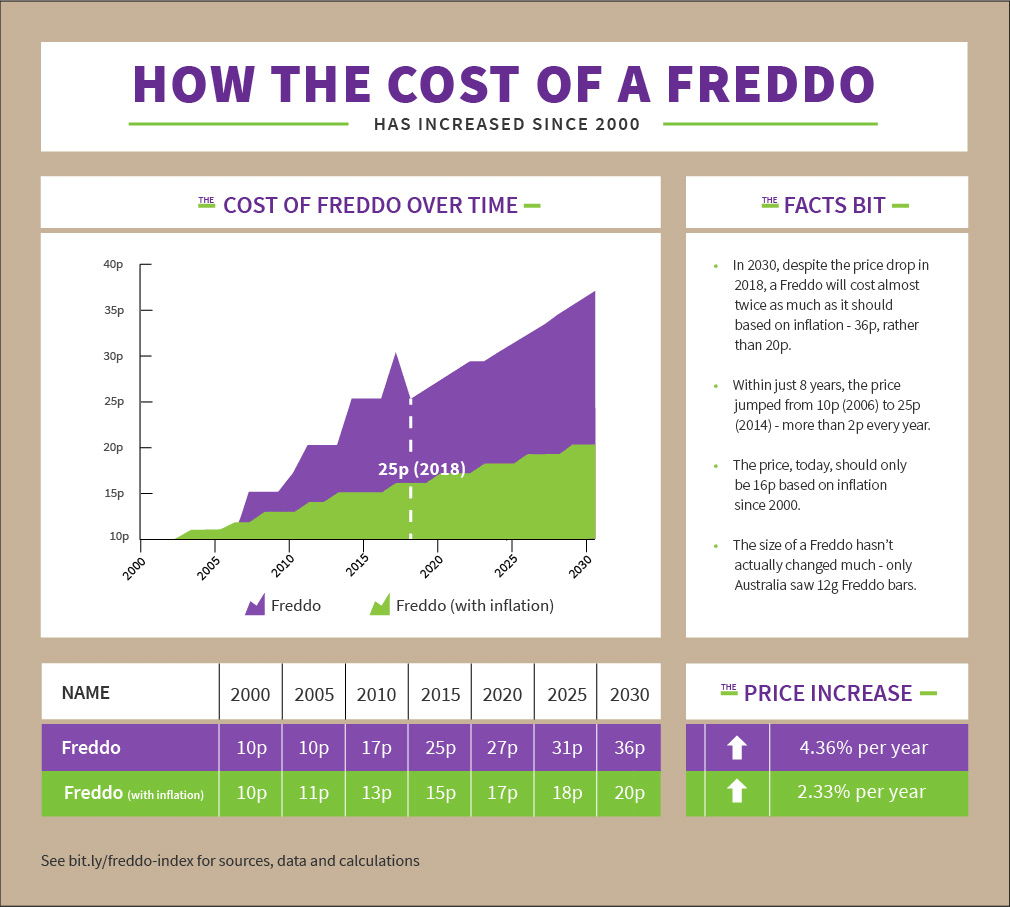
Yes, cash still has a place, and arguably a more sizeable chunk of your money could be kept in cash for now (depending on your personal circumstances), but never all of it. The only thing worse than not enough cash, is too much cash. Because you have locked in that loss to inflation, and so what the money could buy you today, there is no chance it will buy you the same in 5 years’ time.  Think of the mighty Freddo Bar for example.
Stop Checking Your Account Every Day

If you check your investment account every day, you will see a lot of volatility, which can cause anxiety or excitement. You might be tempted to sell when the market is down or buy when the market is up, which can hurt your returns in the long run. When has it ever been a good idea to sell low and buy high?

If you check your investment account less frequently, say once a year or even twice, you will see less volatility and more of the overall trend, which can help make you feel more confident and calm. You might be more likely to stick to your plan and achieve your goals. We always say, the best portfolio for you is the one you will stick to.

There is often talk about a study completed by Fidelity which showed that two types of investment account owner beat everyone else in the years from 2003 – 2013. Dead Account Owners, and those who had lost their passwords.

I’m struggling to find the original post, but enough has been written about it from a quick Google search of “Fidelity study dead investors”

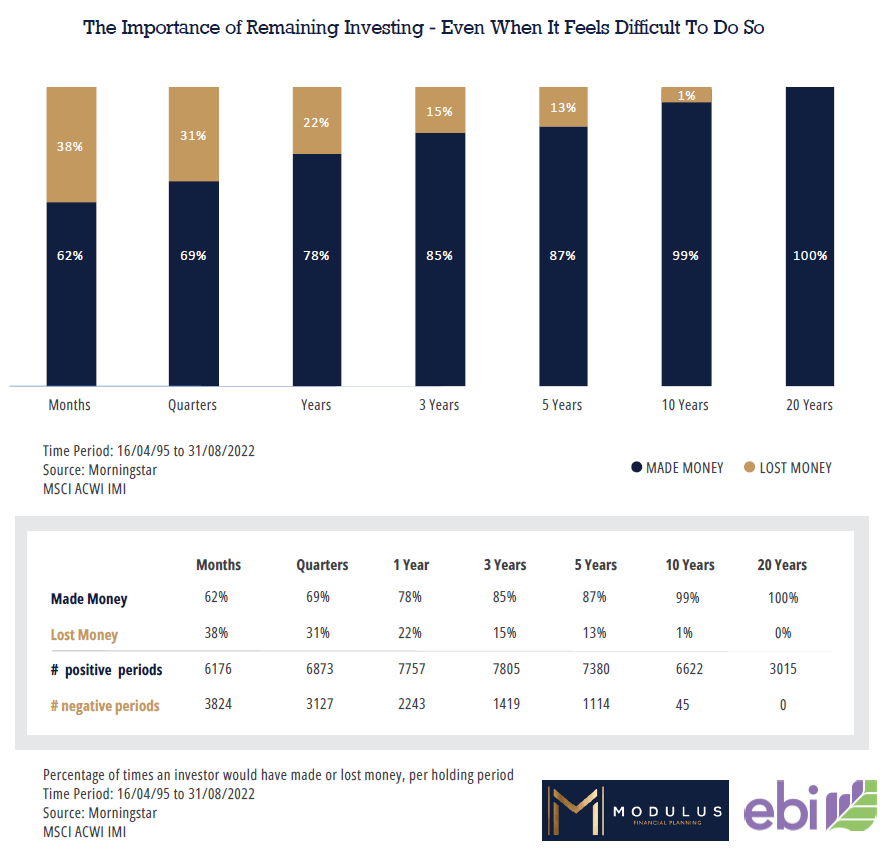
The below shows how often you made money or lost money over the long term. The longer the time horizon, the more likely it is you make money.
Trust The Process

Remember, risk and volatility are part of investing, and they both offer rewards. Risk should give you the potential to earn higher returns than safer investments, and volatility allows you to buy low and sell high. Your biggest risk of all is thinking that holding everything in cash is risk-free. Because inflation will win.

The key is to understand the differences, manage it, and most importantly use the information to your advantage.

We make the investment decisions based on all the evidence and data we have available. We have our own money in the same investments our clients do. And so, we feel it just as much as you do.

One thing we can offer, is we’ve been going through times like this with clients now for 10-15 years. It’s never easy when you see money go down. But trust in the process, forget the short-term fluctuations and focus on the long term, and it will work itself out.

Contact

Get Connected.

Contact Us

Modulus Financial Planning look forward for you to contact us for more information about any of our products or services.

Modulus Financial Planning

Suite 12, Avonmore House,
15 Church Square, Banbridge,
BT32 4AP, Co.Down, Northern Ireland

Let’s Talk About Your Finances

Here for all your saving & investment, pension & retirement planning, tax & estate preservation and insurances.

CALL: 028 40 33 68 67

Modulus Financial Planning Ltd is authorised and regulated by the Financial Conduct Authority. We are entered on the FCA Register under reference 965916. Registered in Northern Ireland, Company Number NI673772.
The guidance and/or advice contained within this website are subject to the UK regulatory regime and are therefore targeted at consumers based in the UK.

The Financial Ombudsman Service is available to sort out individual complaints that clients and financial services businesses aren’t able to resolve themselves. To contact the Financial Ombudsman Service, please visit www.financial-ombudsman.org.uk.

Privacy Policy

Contact