Blog by Modulus

READ OUR BLOG

What Does The SpaceX IPO Mean For Your Portfolio?

You may have seen headlines about SpaceX going public at a huge valuation, as potentially one of the biggest stock market listings ever.

It was valued as a $1.75-2 trilllion company for it’s IPO (Initial Public Offering – when we can all buy shares in the company as a member of the public)

So the natural question is:

“If I’m invested in a ‘tracker’ or a diversified portfolio… will I suddenly own a big chunk of SpaceX?”

The short answer is: No—not in the way you might expect.

Here’s why.

Big headline numbers don’t tell the full story

When a company lists at a valuation of, say, $1 trillion or more, it’s easy to assume:

  • It immediately becomes a major part of stock market indices
  • And therefore a big part of your portfolio

But that’s not how it works.

What matters isn’t the total value of the company. It’s how many shares are actually available to buy

In many high-profile IPOs, only a small percentage of the company is sold to the public at first. The rest is often still held by founders, employees, or early investors.

So while the headline valuation may be enormous, the tradable portion is much, much smaller.

Using SpaceX as an example

When SpaceX listed, only a small slice of its shares were available to investors. Only about 4% of it to be exact.

That means it did not enter stock market indices at its full size and, therefore, its initial impact on portfolios is much more limited than you would think.

Over time, more shares may become available—but this usually happens gradually, not all at once. It will take private investors, like Elon Musk, VC funds or other employees who maybe hold locked in shares to decide to sell them over time. They might even never decide to sell…

Index funds don’t jump in overnight

We invest in index funds – funds which hold lots of different companies at once. Today, our current holding of shares is in 7,853 different companies, and if we include bonds and fixed interest, 13,356 individual holdings. (Figures correct on 18th June 2026, taken from EBI Portfolios Core Data Exposure)

So if you think about spreading your eggs in many baskets, we have 13,356 different baskets today.

Another common misconception is that index funds immediately pile in on day one.

In reality:

  • Different indices have rules about when new companies are included
  • Many require a waiting period
  • Some only review changes at set points during the year

So inclusion in the fund is often phased and controlled, not automatic

Even when a company is added quickly, it’s still governed by rules. Not hype. Which of course, whether you love him or hate him, Mr Musk has a reputation for hype.

Not all “passive” portfolios behave the same

It’s also important to remember that not all passive investments are identical

Some funds track the market very closely, but others:

  • Apply filters (for example, ESG criteria)
  • Focus on certain company characteristics like quality or stability or size
  • Only include companies that fit their approach

That means a newly listed company like SpaceX may not be held straight away, or may be held at a much smaller level than the headlines suggest


Diversification does the heavy lifting

Even when companies like SpaceX are added to indices, there’s a key safeguard: Diversification

Most well-constructed portfolios hold thousands of companies spread across all regions and sectors. So even a very large new company typically remains as just one small part of a much bigger picture


What this means for YOU

✔ You won’t suddenly have a large, concentrated exposure to SpaceX – or any new IPO for that matter as Anthropic and Open AI will also be coming to market
✔ Any exposure builds gradually and under strict rules
✔ Your portfolio remains diversified and disciplined

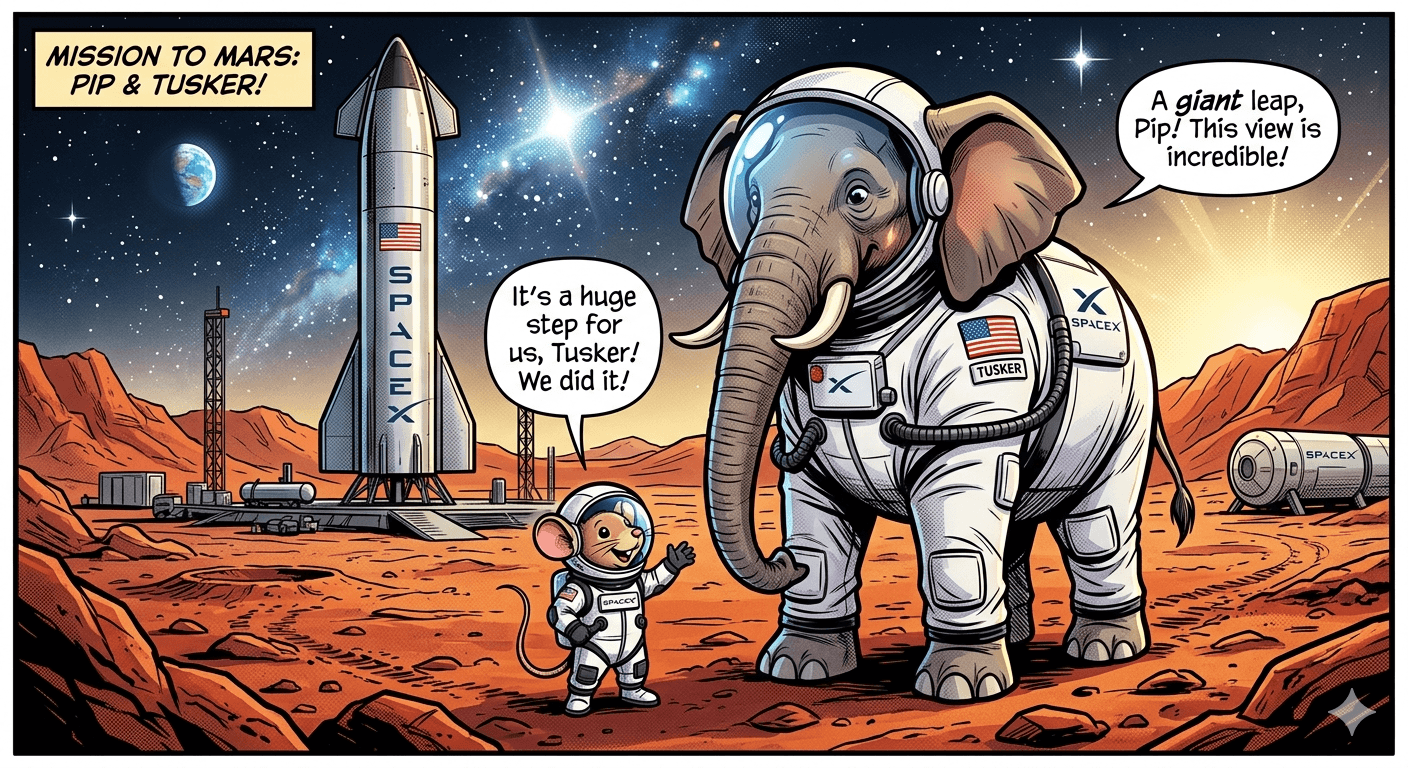
Importantly, we’re not trying to predict whether a company like SpaceX will take us to the moon (or Mars) or fall on it’s face like an exploding rocket at take-off. We also won’t chase headlines and short-term excitement

Instead, the focus remains on:

– Owning a broad range of investments
– Keeping costs low
– Sticking to the long-term plan

So yes, Big IPOs can create a lot of noise. But your portfolio isn’t driven by headlines. It’s built on a structured, disciplined approach that keeps any single company in its proper place.

You might remember us saying that we don’t want to own enough of one company to make a killing, because it could easily bite us and owning too much of one company, could kill us.
 

Back to your Financial Future

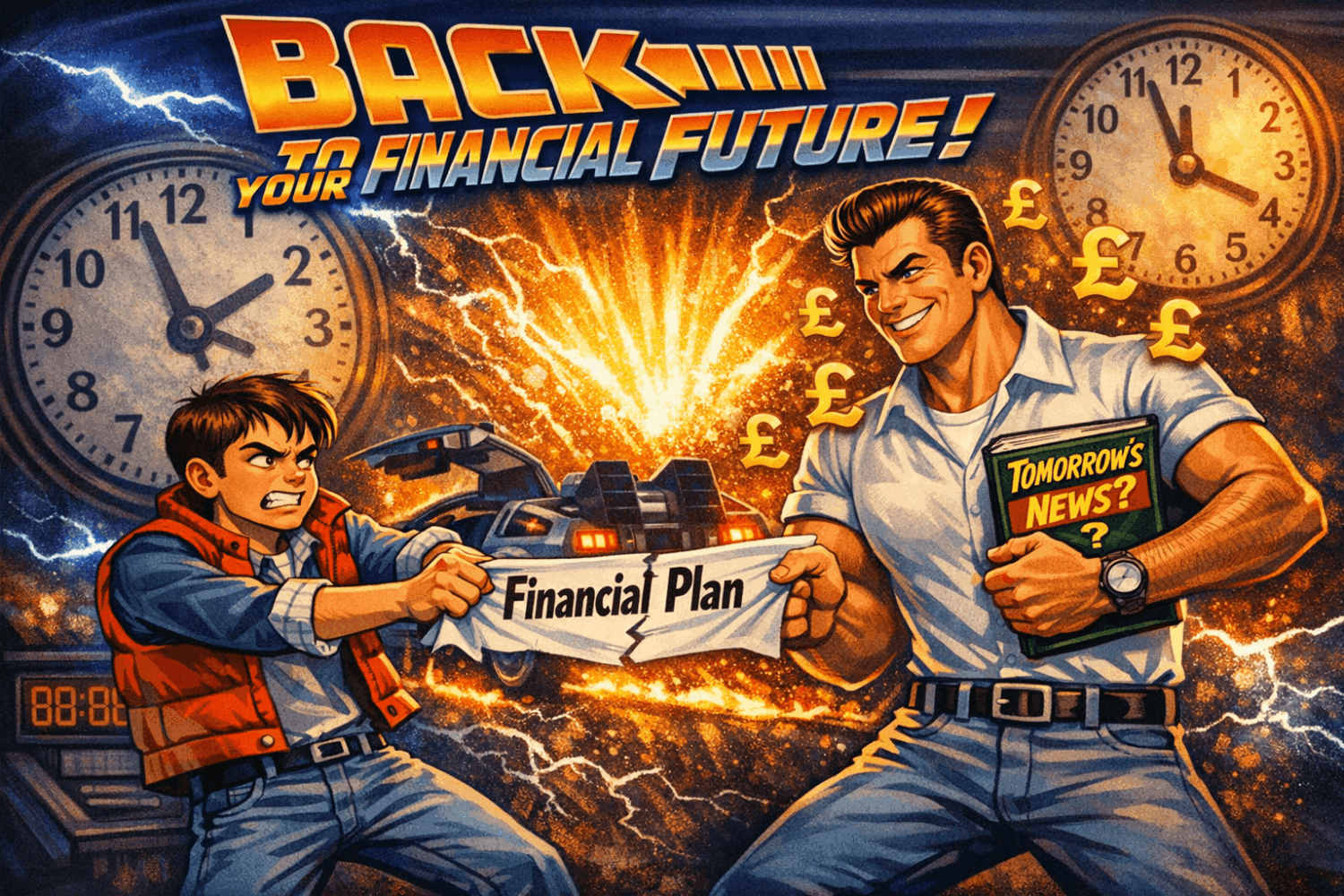
Have you ever wished you could take a look into the future – to see how your team has done, find out the winning Lotto Numbers or even just have an idea of what is going to happen after you make an important financial decision? Most investors have obviously dreamed about owning a time machine or crystal ball that would help to reveal tomorrow’s headlines today and therefore allow them to avoid market downturns and capitalise on opportunities before they arise. However, a piece of research by a company called Elm Wealth in November 2023, shows that having that crystal ball might not give the results everyone might expect!

The Crystal Ball Fantasy

Ok – so this really caught my attention because they referenced Back to the Future and I am a huge 80’s movie nut! For those who haven’t seen it, basically Doc Brown builds a time machine using the often-lamented DeLorean Car (built in Belfast). A series of wacky adventures ensues where they must undo a series of events to get back to their own timeline and the lives they know (or kinda know!).

In the sequel, “Back to the Future II,” the villain Biff becomes wealthy by betting on sporting events using a sports results book from the future (Gray’s Sports Almanac – I didn’t even need to research this part).

In essence the researchers at Elm Wealth tested a similar concept. They provided 118 financially trained participants with $50 each and allowed them to invest in the S&P500 Index and 30 Year US Treasury Bonds, after viewing the next day’s Wall Street Journal front page (with stock and bond data blacked out).  The experiment rand for 15 days (each representing a year from 2008 – 2022).

The results were surprising to say the lease. Despite this seemingly remarkable advantage, about half of the participants lost money, and one in six went bankrupt. The average participant grew their initial stake by just 3.2%.

This fun, but very instructive game, teaches us something profound: knowing what will happen tomorrow is far less valuable than we imagine.

When Future Knowledge Falls Short

How could someone lose money after seeing tomorrow’s headlines? Simply put, information is not the same as wisdom.

First, interpreting news correctly proved challenging. Participants predicted market directions accurately only 51.5% of the time—barely better than flipping a coin.  If you had taken part in the experiment and the headline you read for 2020 was about Covid, then you likely wouldn’t invest! The same is true when we think about last year (2025) and Trumps Tariffs! However, on both years, the markets were up. Knowing what is happening globally doesn’t mean that you should change your investing principles.

More importantly, participants struggled with the “sizing challenge”—knowing how much to commit to each decision. It’s like knowing rain is coming but not knowing whether to carry an umbrella or build an ark. Many overcommitted to uncertain prospects or under committed to their strongest convictions.

The True Value of Financial Planning

This study is a timely reminder that comprehensive financial planning provides more value than even accurate market predictions. True financial security doesn’t come from predicting next week’s market moves. It comes from building a resilient plan that weathers uncertainty while capitalising on long-term growth.

Think of it like sailing across an ocean. While tomorrow’s weather report would help, it pales in comparison to having a seaworthy vessel, proper navigation tools, and an experienced captain. The study participants were trying to navigate changing seas with nothing but a weather forecast.

In contrast, thoughtful financial planning spreads risk across different asset classes and time horizons. It integrates tax planning, estate considerations, and risk management into a framework that doesn’t depend on predicting specific events. While markets cycle through reactions and overreactions, your financial plan remains steady, focused on the destination rather than day-to-day waves.

While the crystal ball experiment focuses on short-term trading decisions, its lessons also apply to long-term financial planning.  I wonder how those participants would have fared if they had built their portfolio and let it sit for the 15 days of the experiment (representing 15 years). If I was a gambling man (which I am not), then I would predict that had most of the participants simply bought the market (the funds), in a split which they were happy with then they’d have outperformed the active chopping and changing approach!

Building a Future Without Predictions

The path to financial independence isn’t paved with perfect predictions but with timeless principles: patient investing that weathers market volatility; appropriate diversification; consistent saving that creates margin for unexpected events; and regular reviews that align your plan with your changing circumstances.

This experiment ultimately teaches us that peace of mind comes not from eliminating uncertainty (which is impossible even with perfect information) but from being prepared for multiple scenarios. A well-constructed financial plan delivers something far more valuable than tomorrow’s headlines: confidence today and resilience tomorrow.

As your financial planners, our commitment isn’t to predict the future but to prepare you for whatever it may bring. Rather than wishing for perfect foresight, let’s focus on creating the flexibility and resilience that will serve you well regardless of tomorrow’s headlines.

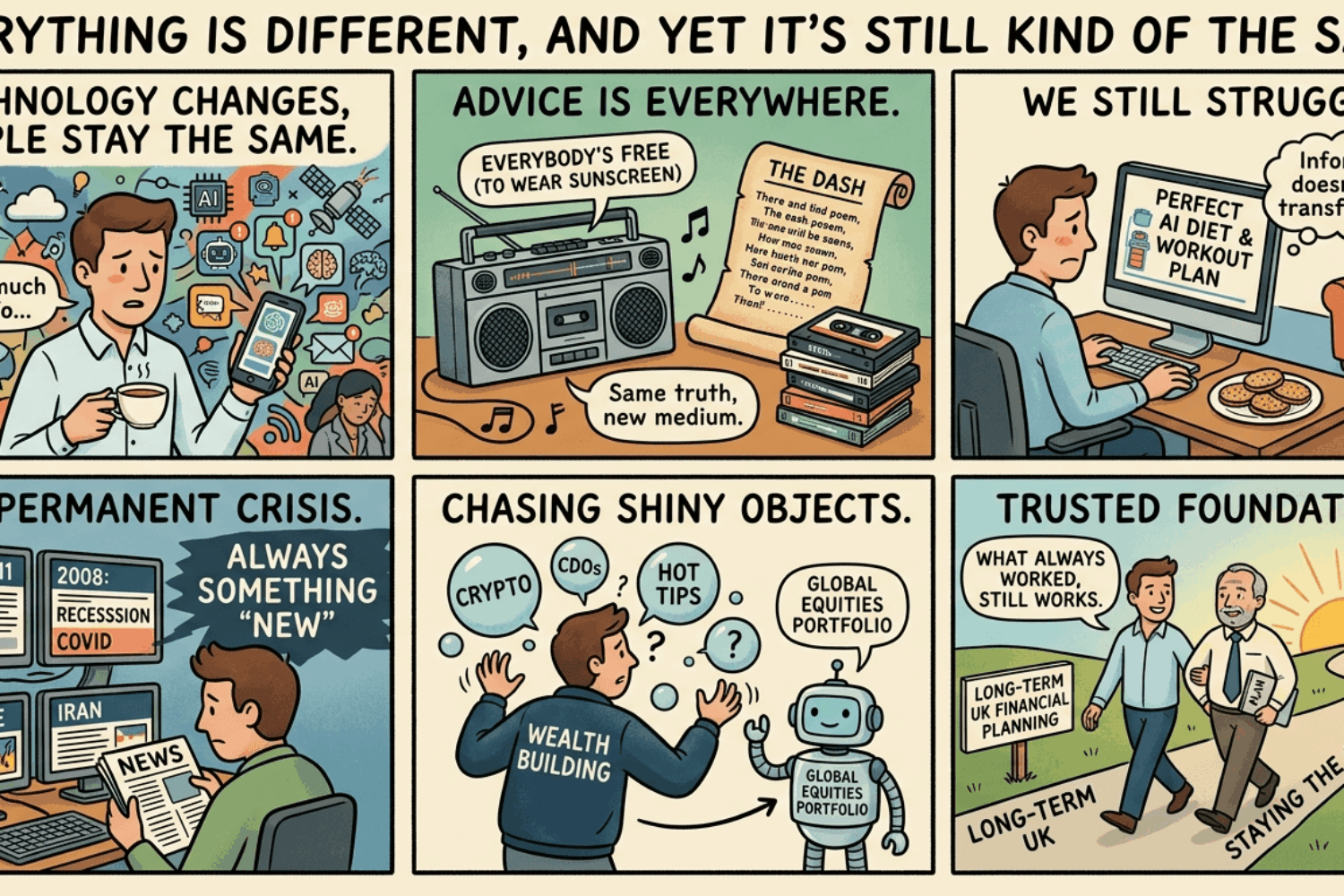
Everything is different, and yet, it’s still kind of the same

If someone 100 years ago teleported into today’s life they would be amazed by how far we’ve come. If you look at what’s on my desk or the apps on your phone, they’d swear we were living in a sci-fi novel. We have little metal boxes in our pockets which allow us access to cameras, TV shows, movies, banking, information, real time global updates and artificial intelligence.

Everything has changed. And yet, when we sit down to talk about your life, your goals, and your fears, it becomes clear: nothing has really changed at all.


The Information Illusion

We are drowning in data. Information hits us from every angle now. The news, radio, phone, TV, laptop, smart watch…. We have more access to “the truth” than any generation in human history, yet we still struggle to listen.

Take fitness and AI, for example. It can give you a perfect, calorie controlled meal plan and a bespoke 12-week exercise plan in less than five seconds. By that logic, we should all be walking around with six packs and perfect cardiovascular health.

Claude and Chat GPT are now making big moves in the personal finance world, offering investment and tax advice. We should all be rolling in it and bringing an end to our jobs.

But we aren’t. Why? Because the problem was never a lack of information; it was the discipline to act on it.

I still speak with clients and potential clients who just want me to take away the hassle and be there to do it for them, to let them get on with their lives. That’s why I’m not sure if we’ll ever be replaced.

Advice is Everywhere (and it’s older than you think)

We often think the “answers” are new discoveries, but advice has always been there for those who have been looking. People have been singing and writing them for decades.

  • Songs: Remember the 90s hit Wear Sunscreen” by Baz Luhrman? I remember this on the radio when I was 7, and I didn’t get it at all. I thought it was the stupidest thing to be on radio. But recently, I saw a thread where younger users today thought the song and lyrics were generated by a sophisticated AI prompt for “life advice.” In reality, it was a 1997 song based on an essay in a newspaper column. So I went back and listened to it again. And now with a bit more life experience, I get it. The advice: don’t worry about the future, be proud of your appearance, don’t compare yourself to others because sometimes you’ll be ahead, sometimes you’re behind, look after your knees, look after your relationships with your friends and family, wear sunscreen….. it’s as timeless as it gets. Seriously, go back and listen to it.
  • Poetry: Now I don’t know much about poetry, but there is one poem I’m aware of which is The Dash” by Linda Ellis. It’s a poem about the dates on your grave. It will have your name, and the date of your birth and your death. But the poem is about how the only thing that actually matters, what anyone remembers about you, is the tiny little line in between them. The Dash. It’s about filling your life with experiences and relationships rather than just accumulating years.
  • Social Media: My Instagram feed is full of “clean eating” hacks and “optimal training splits” for “skinny fat dads who are too busy working and with kids to exercise and build muscles”. My Tiktok feed is full of caravan tips, websites that are so useful they should be illegal, and Microsoft Office tips and hacks. My X (Twitter) is mostly just football which isn’t all that useful if I’m honest…   But we have information everywhere. There seems to be more fitness influencers than gym members (I exaggerate obviously) yet the secret remains what it always was; move more, eat less processed food, and stay consistent.

The Investment Crisis of the Week

In the world of investments there is a semi-permanent “end of the world” narrative.

In my lifetime, which is only 35  (almost 36) years so far,  I’ve seen the panic of 9/11, the systemic collapse and global recession of 2008, the global shutdown of Covid-19, the inflation crisis we blame on Liz Truss, Trump’s Trumping with Tariffs and the constant geopolitical fallouts in the Middle East, and more recently Ukraine and Iran. Each time, something “new” arrives to threaten our stability “because this time, it’s different…” But it isn’t.

Even specifically in the investment world, we’ve had the complexity of CDOs (Collateralised Debt Obligations) – watch the movie The Big Short – or the new sexy assets like Crypto or remember the Bored Ape NFTs. How did that one work out for you Justin Bieber? Spoiler: he paid $1.3million for a digital picture of a bored ape, but apparently it’s now worth around $12,000 which is a loss in value of 99%. That would sting almost anyone but, in fairness, probably not Justin Bieber – credit where it’s due.

When these events hit, our impulse is to find a new solution for the new world. But the data tells a different story.


Why We Stick to the Old Ways

Despite the noise, the most successful investors aren’t those chasing the latest digital token or trying to hedge against the apocalypse. They are the ones who stick to what has always worked: Global Equities.

Owning a part of the world’s most profitable, innovative companies is a strategy that has survived world wars, pandemics, and technological revolutions. The “everything is different” crowd will tell you that the old rules don’t apply, but the “still kind of the same” reality is that human ingenuity and global trade continue to drive value over the long term.

The Bottom Line

Technology changes the how, but it doesn’t change the why. You still want security. You still want to provide for your family.  You still want experiences. You still want a “dash” you can be proud of.

Our job isn’t just to give you more information – AI can do that. Our job is to help you filter out the “different” so you can focus on the “same”: the timeless principles of patience, discipline, and a well diversified global portfolio.

Stay the course. It’s worked before, and it’s working now.

If you want to talk about any of this with us over a coffee, even if it’s just to reminisce about old music, get in touch.

And one last thing: the sun’s coming out now, so make sure you stick on some sun cream


The Investor’s Two Constant Temptations

Smart long-term investors generally have a good understanding of the mindsets and behaviours that lead to financial success. They diligently act on a solid plan and have thought through the various trade-offs that all financial decisions demand.

However, even the best of us are still human. While the principles of smart investing may be simple to understand, they’re certainly not easy to act on consistently.

Every significant world event affects our financial system. And each one can feel scarier than the last.

These events typically evoke emotions that, when acted on, can be detrimental to our financial health. Unfortunately, emotions are highly contagious, and when these emotions make it harder to be good investors, we must be careful about how we proceed. In particular, there are two temptations we see even smart investors face on a very regular basis. Successfully dealing with these temptations is what separates good investors from great investors.

Temptation 1: Forecasting The Economy

Only when the tide goes out do you discover who’s been swimming naked – Warren Buffett

Economists are charged with understanding how our economy’s complex web functions. They help us understand the relationships between interest rates, inflation, economic growth, and other factors. Their knowledge informs policy decisions that feed through the entire global economy.

However, they inevitably get seduced by the financial media into making predictions about the future trajectory of the economy’s vital markers. While understanding the current trajectory of key metrics is helpful in understanding the market’s current position in a cycle, relying on these metrics to make outright forecasts that tempt long-term investors into making financial planning changes is very dangerous.

Not many newspapers are sold by predictions of a slow reversion to the mean, so we expect the outrageous predictions to continue for the time being. However, the reality is that making accurate forecasts about variables highly dependent on one another is a fool’s errand.

The success rate of past forecasts has been woefully bad, which makes sense as the trajectory of all variables is mainly dependent on future events that are currently unknown to us. It might be fun to stay informed on the economy, but being caught up in the likely short-term changes does not make it easier to be a long-term investor.

Temptation 2: Timing The Investment Markets

Money is like a bar of soap; the more you touch it, the less you have – Warren Buffett

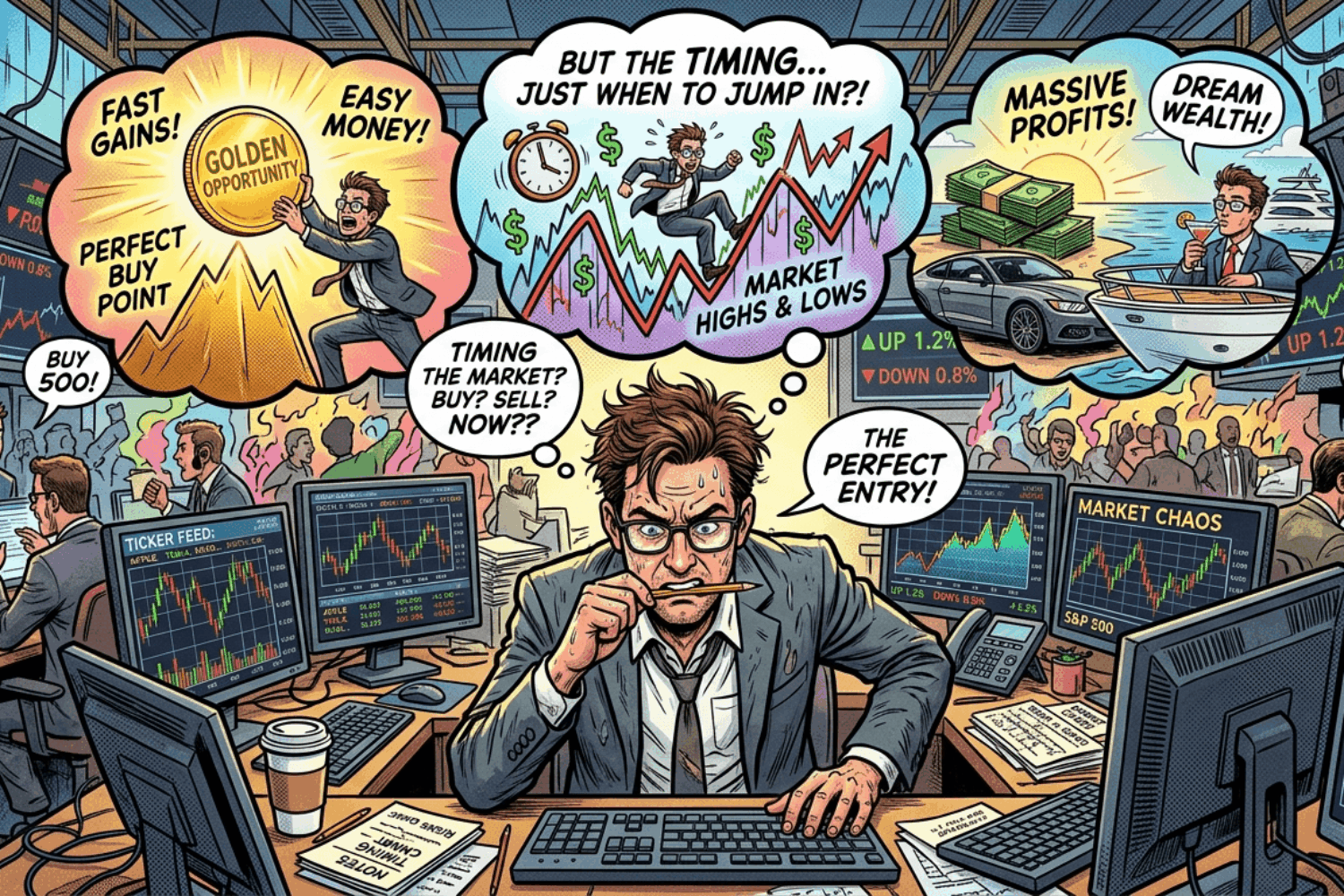
Linked to the first temptation of forecasting the economy comes the investor’s biggest temptation of all: the misplaced confidence that the investment market’s volatile cycles can be timed consistently.

The economic metrics we’ve discussed are usually lagging metrics that tell us what’s recently happened. The market, made up of millions of investors (all with their own objectives), is a forward-looking organism. In aggregate, it tries to discount future events and cash flows into a market price investors can trade on.

The reality is that stock markets are highly unpredictable, often reacting in ways that are confusing even to seasoned investors. A television pundit trying to summarise why the global market moved in a specific direction on a particular day is, unfortunately, nothing more than an attempt to fill airtime. The unvarnished truth is that we don’t know why the market behaves the way it does.

Trying to guess when markets are about to go down so that we can profit or run for cover has cost many an investor their life’s fortunes. The long-term investor’s focus is better directed at ensuring that they’re invested in the right asset mix, controlling their expenses and making heavy contributions, and understanding that their behaviour is vital to their financial success.

A Better Way

While the current moment always feels more uncertain than the past events we know the ending to, most investors can agree that we never really have any certainty about the immediate future. History is just a long list of surprises we were dealt, which we ultimately navigated in the best way we could.

The current economy has potential risks, as every economy always has. Our minds are extrapolating machines, but assuming that recent trends will continue indefinitely is unrealistic and not helpful in our quest to make smart financial decisions. The current investment market is also no more uncertain than ever. While we invest with certain average return expectations, the short term will almost always be volatile in both directions. Avoiding the temptation to time these cycles is the intelligent investor’s most important skill.

We give you permission to opt out of these unwinnable games. Your time and energy are better spent remaining clear about what’s important to your family over the long term. This is a game we are committed to helping you to win.


Volatility: An Investor’s Forgotten Friend

Investment markets have been very kind to global equity investors over the last few years. After a period of sideways markets and soaring inflation, the S&P 500 (the world’s premier stock market) rose by 24% in 2023, another 23% in 2024 and 16% in 2025.

With historical average returns in the 8-10% range, these are extraordinary returns that patient and disciplined investors will be delighted with.

Most significantly, the last few years saw no extended periods of significant declines.

But it wasn’t all plain sailing though. Markets did still go down during the year.

In 2023, the largest decline was -10% between July and October. In 2024, the worst was a 21-day decline of only -8% between July and August. In 2025, Trump’s Tariffs caused a larger decline in March and April of about 19%. But each time, the market rebounded relatively quickly.

While this was a welcome respite from the normal market rhythm, the financial media would likely have been dismayed! More seriously, there’s a danger that investors will forget the important lessons learnt from past declines.


To prepare you for the possibility of more significant declines in the coming years, we outline a few points below that you should keep in mind when others are losing theirs.

What You Should Know

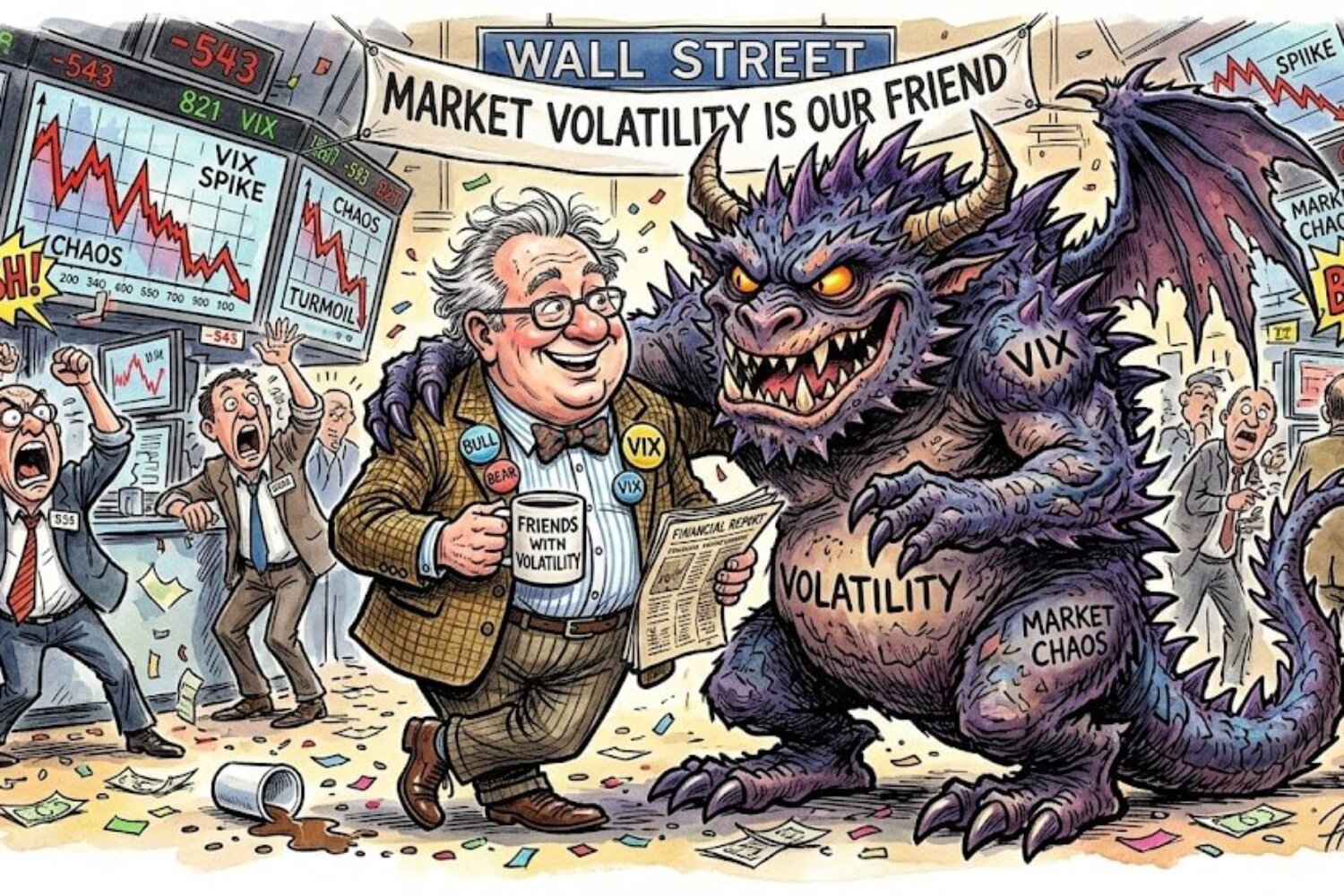
It is a feature of the stock market that values do not move in a straight line but instead fluctuate around a generally upward trend. We refer to this as “volatility.” Volatility will be painted as a monster in the media. Something to be scared of. To avoid. But if you can make yourself accept its presence, even look favourably upon it, you will likely succeed.

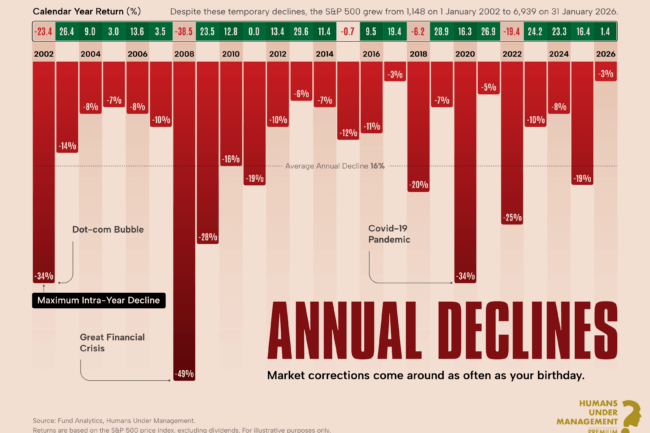
A market correction is defined as a 10% decline from a previous market high. While it may sound like a significant number, these events occur far more frequently than most investors believe. Indeed, they come around as often as your birthday, with years like 2024 being the exception.

Since the turn of the century, the average annual decline has been approximately -16%. While this may surprise you, it’s worth noting that about three in four years still ended with a positive return.

We also know from market history that we expect a decline of more than -30% approximately every five years (on average), as we last experienced in 2020 during Covid.

What Should You Do?

We know that stock markets generally provide positive returns about three in every four years. The one negative year is what earns you the other three positive years. It’s the price of admission for profiting from the collective ingenuity of the hundreds of companies working for you while you sleep. We encourage you to see the temporary declines as the reason for the stock market’s permanent returns. You can’t have one without the other.

Unfortunately, we cannot consistently predict when these fluctuations will occur or when they will reverse. To be a successful long-term investor, one must accept this with humility.

Market declines will consistently occur throughout your investing life, and your mindset during these times is a choice that will shape your financial future. We advise you to confront them with confidence rather than fear while being mindful of the opportunities they present.

Time and Volatility is your friend

Ultimately, what happens in the next year is relatively unimportant to your 30-year plans. If you’re investing long-term, the odds are stacked in your favour. You’re almost guaranteed to win.

After two years of little volatility, if we experience a decline in the coming months, be encouraged that you are busy earning future returns. Additionally, if you’re still saving, declines are your best friend, allowing you to buy more units of shares at reduced prices.

While we don’t know which way the market will go, we’re pretty confident about where it will be in 10 years: higher. We’ll keep reminding you so that the next time it happens, you aren’t overly surprised.

Time is the enemy of market declines, and most investors have plenty of time.


Inheritance Tax Is Changing —What Do Business Owners & Families Need to Know?

Most people will have heard of Inheritance Tax, but for many it is still gobbledygook! Phrases like Nil-rate bands, business relief, lifetime allowances etc… can sound complicated and isn’t exactly thrilling.

So, I am going to try and explain some key points as simply as possible (hopefully so that even a teenager could understand it – although I really don’t know how many teenagers read blogs these days!).

This is all quite relevant now, because in December 2025, the UK government made an amendment to the incoming Inheritance Tax rules. This change, a pretty major one, will be of interest to business owners and farmers, especially when they are planning on passing wealth to their families.


Firstly: What Even Is Inheritance Tax?

Imagine you’ve spent your entire life building up your money, home, business, investments, and all the other things that make up your “estate.”

When you die, HMRC (the taxman) looks at the value of what you owned and says:

“If it’s over a certain amount, we want a slice.”

That slice is Inheritance Tax (IHT). The amount you pay is usually 40% on anything above your allowances (e.g. if the value of the estate was £1M after all allowances then the IHT would be £400k).  There are times when the rate will be lower than 40%, usually when a trading business is included in the estate (more on that later).


Ok, so what’s an “Estate” then?

Your estate is pretty much everything that you own:

  • House
  • Savings
  • Investments
  • Businesses (trading and non-trading)
  • Cars
  • The fancy watch you bought in duty free
  • Pensions – most unused pension funds & death benefits (from 6th April 2027)


Add it all up — that’s what HMRC looks at.


How much can I leave in my estate without having an Inheritance Tax Bill?

The Nil Rate Band (NRB)

This is the standard “tax‑free allowance” for inheritance tax.

Right now, it’s: £325,000 per person.  Think of it like the first £325k of your estate being invisible to HMRC.  It is also transferable between spouses.  This means that if you’re married and one spouse doesn’t use all of their £325k allowance when they die, the leftover part can be passed to the surviving spouse.

So, a married couple can have: Up to £650,000 tax‑free — without having to do anything complicated.


The Residential Nil Rate Band (RNRB)

If you leave your home to a direct descendant — kids, step‑kids, adopted kids, grandkids — you get an extra allowance.

This is currently £175,000 per person (and is also transferable between spouses).

So, if everything lines up, a couple could get:

  • £325,000 each (Nil Rate Band)
  • £175,000 each (Residential Nil Rate Band)

Which means up to £1 million tax‑free between a married couple.

The catch with the Residential Nil Rate band is that the value of the house has to be the same or more than the RNRB allowance being claimed. So, if the house was valued at £150,000 then only £150,000 of the allowance could be claimed (not the full £175k).

So, to get the full £1Million tax-free IHT allowance, the value of the house being left to a direct descendant needs to be more than £350,000.

Note – If your estate is over £2 million, then the RNRB starts to shrink— you lose £1 of it for every £2 you’re over. So if your combined estate is valued at £2.7M (for a married couple) then you will have completely lost your Residential Nil Rate Band.


Right – so what was the big change in December 2025 then?

Well, you may have heard and seen the uproar, especially from Farmers about Inheritance Tax in recent times (if you haven’t then where have you been – even Jeremy Clarkson was jumping up and down about it!).

If you own a qualifying business (a trading business or farm), the government lets you pass some or all of it to your family without paying Inheritance Tax. This is called Business Relief.  This means that these qualifying businesses, farms etc could pass down through the generations without any Inheritance Tax.


Just a gentle reminder that BR only applies if the business is actively trading and has been owned / held for at least 2 years and is not mainly investment‑based.


In 2024 a huge change was announced – that this relief was going to be capped at £1 Million per person from April 2026.  This meant that the estates for a lot of people would have to pay Inheritance Tax (due to the value of their businesses and farms).

On 23rd December 2025, the government came out with a change which made this new rule a little bit less penal.  The mooted £1Million allowance was changed to £2.5Million per person. That means that a married couple can pass on a trading business or farm, with a value of up to £5Million without any Inheritance Tax (if the wills and estate planning is done correctly).

So, Business Relief was massively cut and then increased again! And for many business owners & farmers, that takes the tax bill from eye‑watering…to potentially non‑existent.


How Long Does an Estate Have to Pay IHT?

For most people

The estate has:

6 months from the end of the month of death to pay any Inheritance Tax.

Miss that deadline and interest starts building immediately.


But for qualifying Business Relief assets

The Inheritance Tax due on qualifying business assets can be paid in 10 equal annual instalments.

This rule exists so families don’t have to sell the business just to cover the tax bill — especially during a bad market.


And here’s the key clarification:

Remember I said that there are times when the Inheritance Tax rate is less than 40%?  Well, the portion of a qualifying business above the £2.5M allowance is taxed at an effective rate of 20% – not 40%!


Business assets over the £2.5Million allowance are taxed at an effective rate of 20%.

This is because anything above the allowance only gets 50% relief, meaning:

  • 50% of the value is taxable
  • taxed at 40% → equals 20% overall


And that 20% can still be paid over 10 years.


So, a husband and wife can leave a qualifying (trading) business or farm, valued at up to £5Million without their family having to pay inheritance tax (provided the planning and wills are structured correctly).

For people who have estates, with qualifying businesses (& farms) greater than the combined £5Million transferrable allowances it means that now is the time to plan!  There are steps that you can take to mitigate the impact of Inheritance Tax, but the key to this is sitting down, reviewing the impact, assess the various options available and then take action!


If this sounds like something that you think you should be considering and want to start the process or even just chat then please contact us here at our offices!


The information in this blog is provided for general guidance only and does not constitute personal financial advice. It highlights broad themes relating to inheritance tax, estate planning and business relief, and should not be relied upon to make decisions about your own financial situation.

Inheritance tax rules are complex, subject to change, and their impact will depend on your individual circumstances. Before taking any action, you should seek regulated financial advice that is tailored to your personal needs, objectives and financial position.  Tax rules may change in the future and this article is based on our understanding as of 30th January 2026.

Modulus Financial Planning Ltd is authorised and regulated by the Financial Conduct Authority.


🎄 Merry Christmas from Modulus Financial Planning! 🎄

As 2025 draws to a close, we would like to take this opportunity to say a big thank you to all our clients for your trust and support throughout the year. It’s been a privilege to work with you all in planning for the future and helping to achieve your goals.


2025 has been another big year here at Modulus! Having seen growth in the business, we felt that it was time to take the next step and so we opened a new Belfast office.  This will mean that we have a presence in Belfast City, with a new home for meeting there for those who want to avail of it.


We have also booked our first series of seminars at locations across Northern Ireland (commencing February 2026).  These seminars will focus on planning for the changes in business reliefs and pension planning. More details and invites for these seminars will be sent out in January.


Just today we have agreed to take on our newest team member who will hopefully be starting in January 2026 (more on that to come!).


2026 is looking to be another big year here at Modulus as we will officially celebrate our 5th birthday, grow our team and expand our presence throughout Northern Ireland and GB!


This Christmas, instead of sending cards, we’ve chosen to give back to our community by donating to:

  • Banbridge Foodbank
  • Cash for Kids – Mission Christmas
  • MS Society
  • Friends of the Cancer Centre


These charities are close to our hearts, especially as some of our clients and their families have been affected by illnesses such as cancer and multiple sclerosis.


Our office will close at 3pm on Tuesday 23rd December and reopen on Monday 5th January 2026.


We wish you and your loved ones a very Merry Christmas and a Happy New Year. We hope that 2026 is healthy, prosperous, peaceful for you all!


John, Dale & The Team at Modulus Financial Planning

Autumn Budget 2025 – What’s Happened?

We think the highlight of the Budget was what wasn’t in it.

As those who we have been speaking to recently will know, we were intending to make a series of videos explaining all the new rules. But having sat down to plan it yesterday, we agreed it wasn’t really necessary.

We had all been prepared for a ripping up of the rule book and being taxed or limited from every angle. But the big things which weren’t mentioned, which had been “leaked” in the press for the last few weeks and months, didn’t even get a mention.


Some of the things which didn’t change include:

  • Further limits on the amount of Tax-Free Cash you could receive from your Pension
  • Limits on the tax relief on pension contributions – it was widely publicised it could be a flat relief to stop higher and additional rate tax-payers receiving 40% or 45% relief on contributions
  • Capital Gains Death Tax – currently, if you pass away, your capital gain “dies with you.” Reports were this was going to be scrapped in a form of Capital Gains on Death Wealth Tax
  • There were in fact no changes to Capital Gains Tax at all
  • Increased Gifting timeframes – there had been suggestions that the 7-year rule would become a 10-year rule before a gift falls out of your estate

In our view, this is all good news that none of this happened! The current Chancellor made changes to help the working man and woman. Look away now if you own a business or are a landlord.


So, what changed then?

Income Tax & Allowances:

  • Dividend tax rises by 2% from April 2026. This will hit both business owners and investors if they hold investments in a General Investment Account
  • Savings and property income tax will increase by 2% from April 2027. Again, savings tax will include income from a GIA, Onshore and Offshore bond, while property tax increase will hit anyone with a Buy to Let property / properties.
  • Income tax bands, Student Loan Repayment thresholds and National Insurance Thresholds are frozen until April 2031 #stealthtax
  • In pensions, if you or an employee avails of Salary Sacrifice, then there will be both Employer and Employee NICs due when this is in excess of £2,000 from April 2029.
  • This shouldn’t have any impact on company owners and directors paying employer contributions into their pensions, but we shall see what this means for those companies who currently offer Salary Sacrifice arrangements, as the benefit to the company will be negligible. The thing here is that the devil is always in the detail.

Savings & Investments

  • A return to separate Cash ISA and Stocks & Shares ISA Allowances. The full ISA allowance (the total amount you can contribute per tax year) remains at £20k per year, but only £12k can be into a Cash ISA, with the remaining £8k into a S&S ISA. In a potential age-discrimination act, those over 65 years old will still be able to contribute £20k into a Cash ISA.
  • There is going to be a review into Lifetime ISAs in January. They will look at closing the account to new entrants in its current guise. They want it to return to a first-time home buyer only account, possibly remove early withdrawal penalties and will look to remove the price limits on first-time homes as the current £450k max price rules out a lot of London flats. Those with an account already open for retirement (age 60) should be unaffected
  • VCT income tax relief reduced from 30% to 20% from April 2026. There are also changes to what can be held inside a VCT which should open this door to funding for bigger companies, but that’s more detail than most need now.

Inheritance Tax

Largely unchanged since last year, with the current £325k Nil Rate Bands now frozen until April 2031. They didn’t really clarify much for business owners and agricultural landowners/farmers, but at least the new £1m Business/Agricultural relief allowance will be transferrable between spouses from April 2026. That means if a husband died and left the farm / land / business to his spouse, then they would have both allowances (£2M) to utilise on their death.

Property Taxes – Mansion Tax

This won’t having an impact on NI homeowners as Stormont decides our rates but for those in England and Wales, a “Mansion Tax” will be added onto your council tax for homes worth over £2m

Business Owners

  • Increases to National Living Wage and Minimum Wages, with the under 18s getting the biggest percentage increase of just over an 8% hourly wage increase. Yes, it might encourage under 18s to get a job, but it might discourage a potential employer from hiring someone under 18 who has no training and experience because the overall cost will be quite similar to hiring someone who might have the experience and training needed already.
  • If you were thinking of selling to an Employee Ownership Trust (EOT) because of the 100% tax relief on the sale, this has now been reduced to a 50% tax relief.

Benefits

Scrapping the Two-Child Universal Credit and Tax Credit benefit cap.

Pensioners

Your State Pension rises by 4.8% from April 2026.

Electric Vehicle Users

A new Pay Per Mile tax is going to be introduced which they estimate will be worth about half of the fuel duty they would have received had you been buying petrol or diesel.

We assume they will do this through annual MOTs and mileage reports for older cars, but no idea how they will do it for the newer cars? Possibly build in a field when you are taxing your car to put in the current mileage ant then impose a retrospective charge? Again, further clarification is needed here.


If you stand back and look at it, there shouldn’t be anything here which will severely alters our financial plans. Little bits of detail on income tax and NIC, but nothing fundamentally changes.

So, all we need to do now, is figure out exactly how the changes to last year’s Budget with IHT on Business Property, Agricultural Property and Unused Pensions is going to work in practice, because it’s just around the corner now.

As ever, if there’s anything specific you want to ask about or talk to us about, give either myself or John a shout to talk it through.


The Shocking Value of Financial Planning

Why Financial Planning Matters More Than You Think

One of the greatest challenges for financial planners is demonstrating the true value of financial planning in that very first meeting with a potential client. The reality is, the value you’ll gain is completely personal; what matters most to you may be very different from someone else. Personal finance is, at its heart, more about you than it is about the numbers. Yet, it’s only after you’ve experienced the process that you can truly appreciate its worth.

Some clients love the feeling of being organised, others want clarity about their assets, and many simply want to save on tax. No two clients are the same, and everyone’s goals are unique. Whether you’re a business owner planning your exit, an employee seeking a change, or a parent striving to provide for your family, financial planning can help you achieve what matters most to you.

Quantifying the Value

Vanguard’s Adviser Alpha Study tried to put a number on the value of working with a financial adviser. Their research concluded that clients benefited by approximately 3% per year compared to those who managed their finances alone. That’s a significant difference, especially over the long term.

Stress and Money: Why Advice Matters

Money is one of the leading causes of stress. Sharing that burden with a professional who can guide and support you is one of the main reasons clients choose to work with a financial planner. We spend time helping clients figure out what they truly want, whether it’s planning for holidays, home renovations, or even starting a side business. We also help you consider the tougher questions, like what happens to your family or your business if you’re not around. These are difficult topics, but they’re essential to address.

The Psychology of Avoidance

A fascinating behavioural study found that people would rather shock themselves with electricity than spend time alone with their thoughts. In the study, participants were left in a quiet room for 15 minutes, and most found it uncomfortable. When given the option, a surprising number chose to self-administer an electric shock—despite previously saying they’d pay to avoid it. The takeaway? Many of us avoid thinking about difficult topics, even when we know it’s important.

Where’s the Real Value?

Rory Sutherland, author of Alchemy, shared his own experience with financial planning. He noted that the cost is upfront, but the true value may not be felt until years later, often when you finally retire or achieve a major life goal. Unlike a dentist who can relieve your pain immediately, financial planning is about preparing for the future, which can make it a tough sell, especially for younger clients who are less inclined towards delayed gratification. He likened it to he dentist naming  a price, and his view is no matter the cost, he will pay to no longer be in pain.

Building Trust and Peace of Mind

Most new clients come to us with a degree of scepticism, often because they’ve been recommended by someone who’s already experienced the process. What people remember most is how we make them feel, not just what we do. By sharing your concerns and working together, we aim to give you peace of mind. The investments, pensions, and ISAs are just tools—the real value is in the planning itself. Our goal is to help you feel safe, reassured, and confident about your financial future.


Ready to experience the value for yourself? Get in touch and see how financial planning can make a difference in your life.

ISAs: Cash is still King but should it be?

Let’s talk about ISAs, or Individual Savings Accounts. These are UK savings accounts that let you save money without paying tax on the interest you earn. Most people think of these as bank accounts but there are several different types of ISAs, with Cash or Stocks & Shares as the 2 most popular. At the end of the 2023-2024 tax year, there was £872 billion in ISA accounts.

What’s the Difference?

  • Cash ISAs – These are like normal bank accounts where you put your money in, and it earns interest over time. The interest rates can change, but your money is safe and won’t go down in value.
  • Stocks & Shares ISAs – These are a bit different. Instead of earning interest, your money is invested in a range of assets, primarily in the stock market. This means your money can grow more, but it can also go down as well.

The Dominance of Cash ISAs

For a long time, Cash ISAs have been more popular than Stocks & Shares ISAs. People like them because they’re simple and safe. You know your money is there, and it’s not going to disappear. According to the latest research from the UK government, around 66.2% of all ISAs are Cash ISAs. Every year, more and more money is being put into ISAs. In the 2023-2024 tax year, about £103 billion was subscribed to Adult ISAs, with around £69.5 billion contributed into Cash ISAs and just over £31 billion into Stocks & Shares ISAs.

Changes Over Time

While Cash ISAs are still very popular, there’s been a noticeable shift. More people are starting to look at Stocks & Shares ISAs. Why? Well, interest rates on Cash ISAs have starting to go down again, meaning the money you save doesn’t grow as much as it used to. Stocks & Shares ISAs have the potential to grow a lot more, even though there is an element of risk.

Should You Switch to Stocks & Shares ISAs?

This is a big question! If you’re someone who likes to play it safe and doesn’t want to risk losing money, sticking with a Cash ISA might be the best choice. The only other reason for sticking to a Cash ISA is if you have plans for the money in the next few years, so you can’t risk the value dropping.

But if you’ve no plans for the money in the next few years, you need to consider the effects of inflation on your money. If you are willing to take a bit more of a risk for the chance of higher returns, a Stocks & Shares ISA should be a good option. And likely you’re only option which has a chance of tracking, if not beating inflation.

Long-Term Savings and Beating Inflation

Now, let’s talk about something important: inflation. Inflation is when the prices of things go up over time. This means that the money you have today won’t be worth as much in the future. If you have no plans for the money you’re saving, or if you’re putting it away for the long term, you should think about investing it to beat inflation.

Cash ISAs are great for short-term savings because they’re safe and you know your money is there. But with interest rates going down, the money you save in a Cash ISA might not grow enough to keep up with inflation. This means that over time, your money could lose it’s purchasing power.

On the other hand, Stocks & Shares ISAs have the potential to grow more over the long term. Even though they’re riskier, they can help your money grow faster than inflation. This means that the money you save today could be worth more in the future, at very least retaining its purchasing power.

Final Thoughts

In the end, the choice between a Cash ISA and a Stocks & Shares ISA depends on your personal situation and how comfortable you are with taking risk. If you need the money in the next couple of years, stick with cash. If there’s no specific purpose for it, consider investing.

If you’re unsure, give us a shout and we can help you make the best decision for your money.


Contact

Get Connected.

Contact Us

Modulus Financial Planning look forward for you to contact us for more information about any of our products or services.

Modulus Financial Planning

Suite 12, Avonmore House,
15 Church Square, Banbridge,
BT32 4AP, Co.Down, Northern Ireland

Let’s Talk About Your Finances

Here for all your saving & investment, pension & retirement planning, tax & estate preservation and insurances.

CALL: 028 40 33 68 67

Modulus Financial Planning Ltd is authorised and regulated by the Financial Conduct Authority. We are entered on the FCA Register under reference 965916. Registered in Northern Ireland, Company Number NI673772.
The guidance and/or advice contained within this website are subject to the UK regulatory regime and are therefore targeted at consumers based in the UK.

The Financial Ombudsman Service is available to sort out individual complaints that clients and financial services businesses aren’t able to resolve themselves. To contact the Financial Ombudsman Service, please visit www.financial-ombudsman.org.uk.

Privacy Policy

Contact